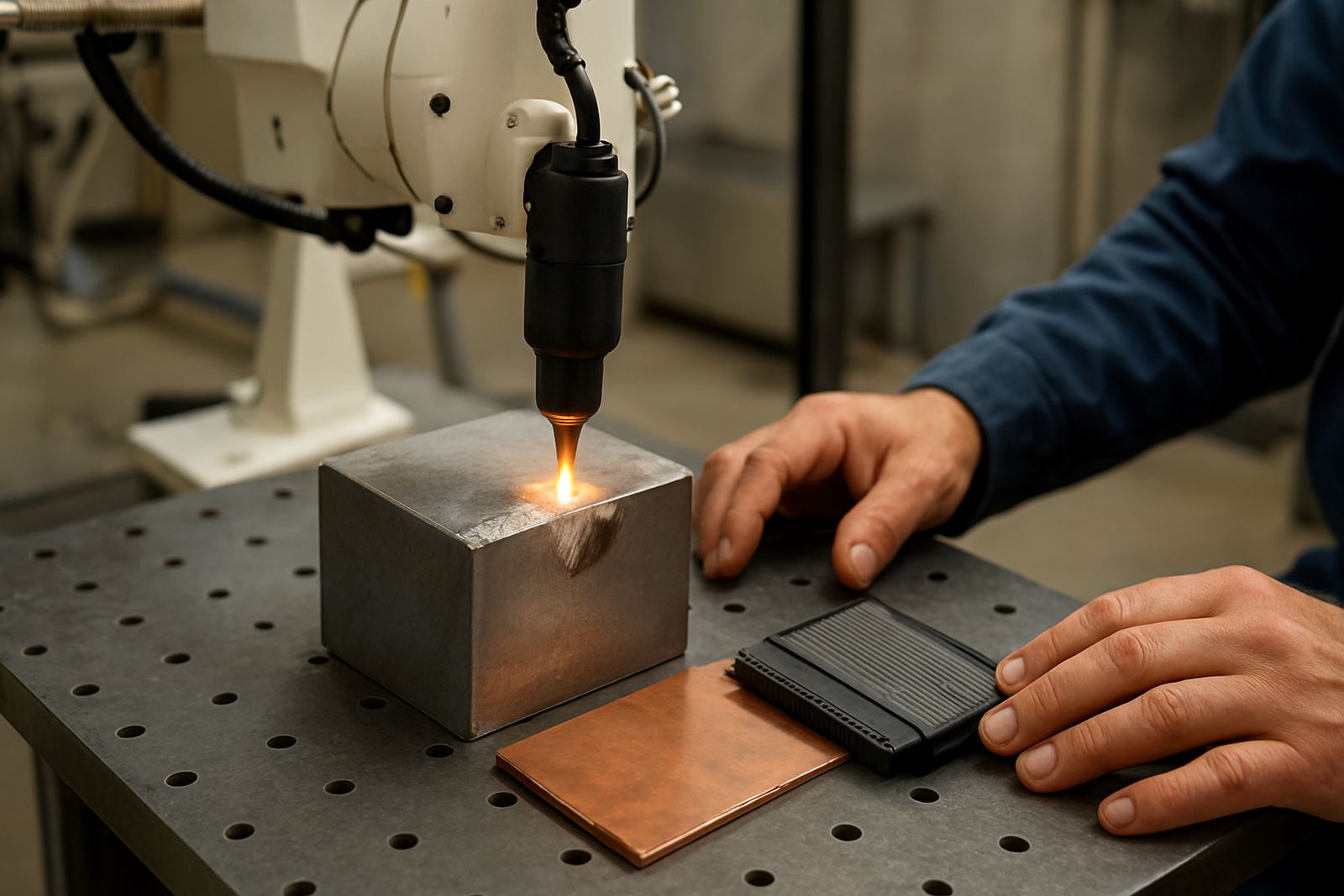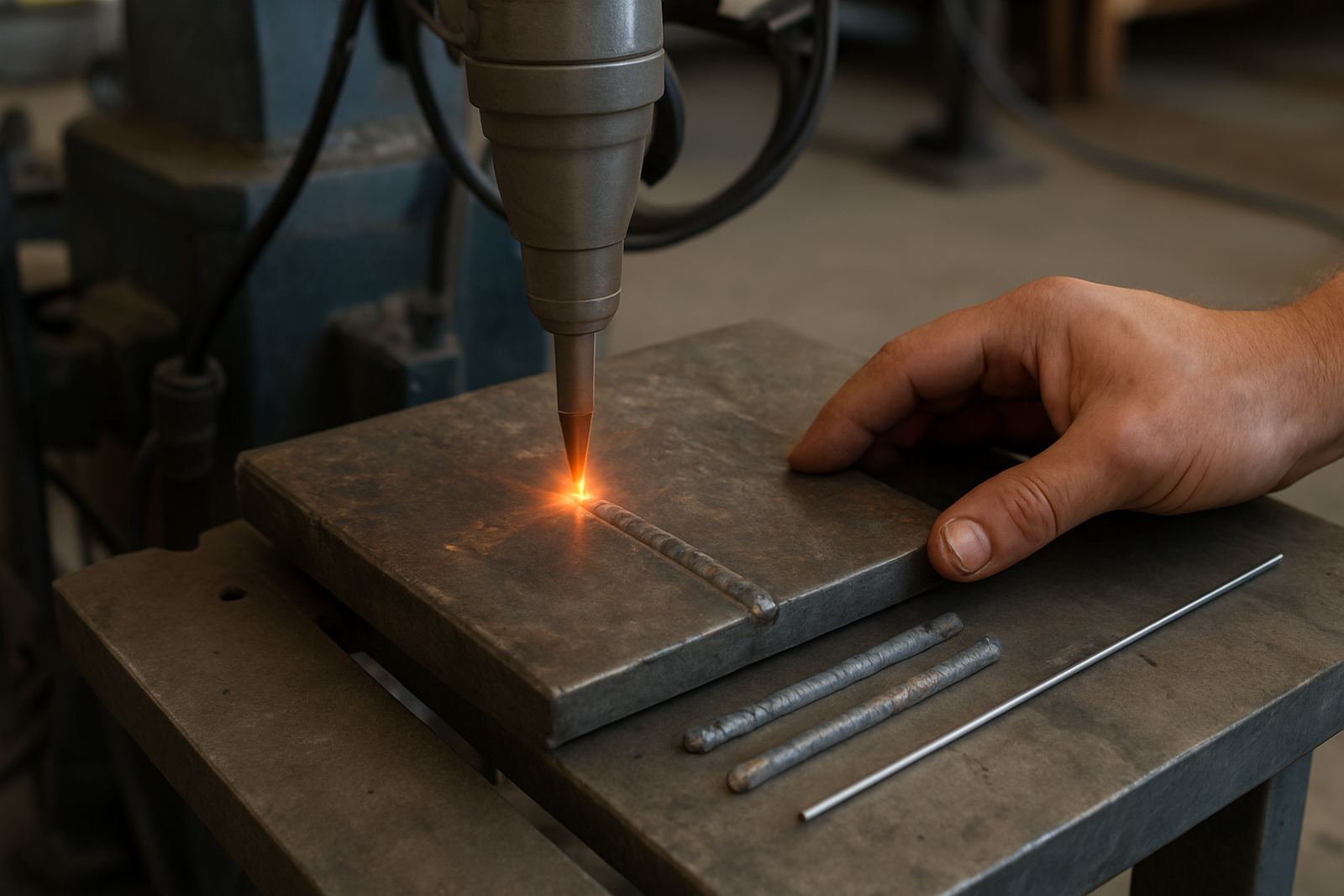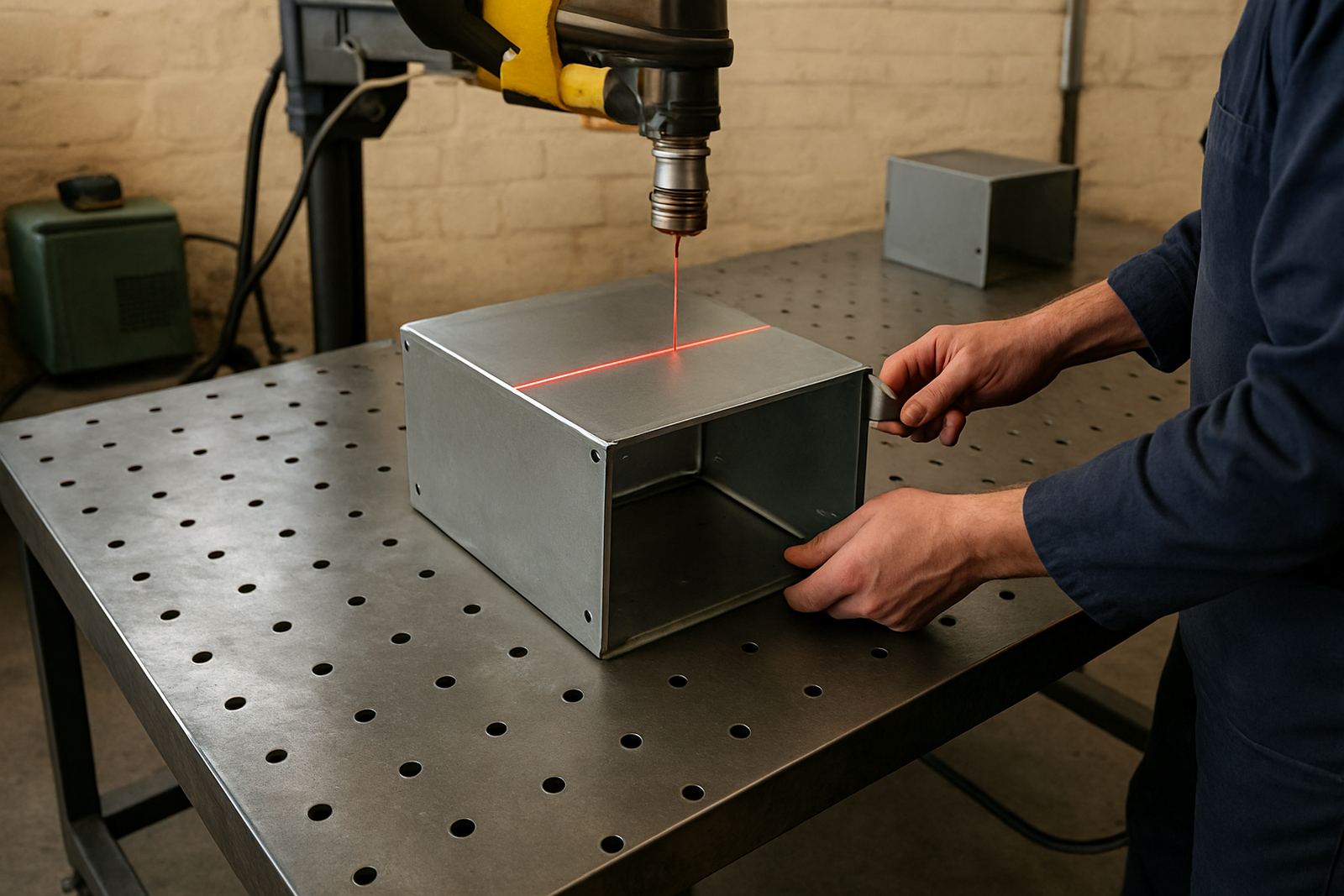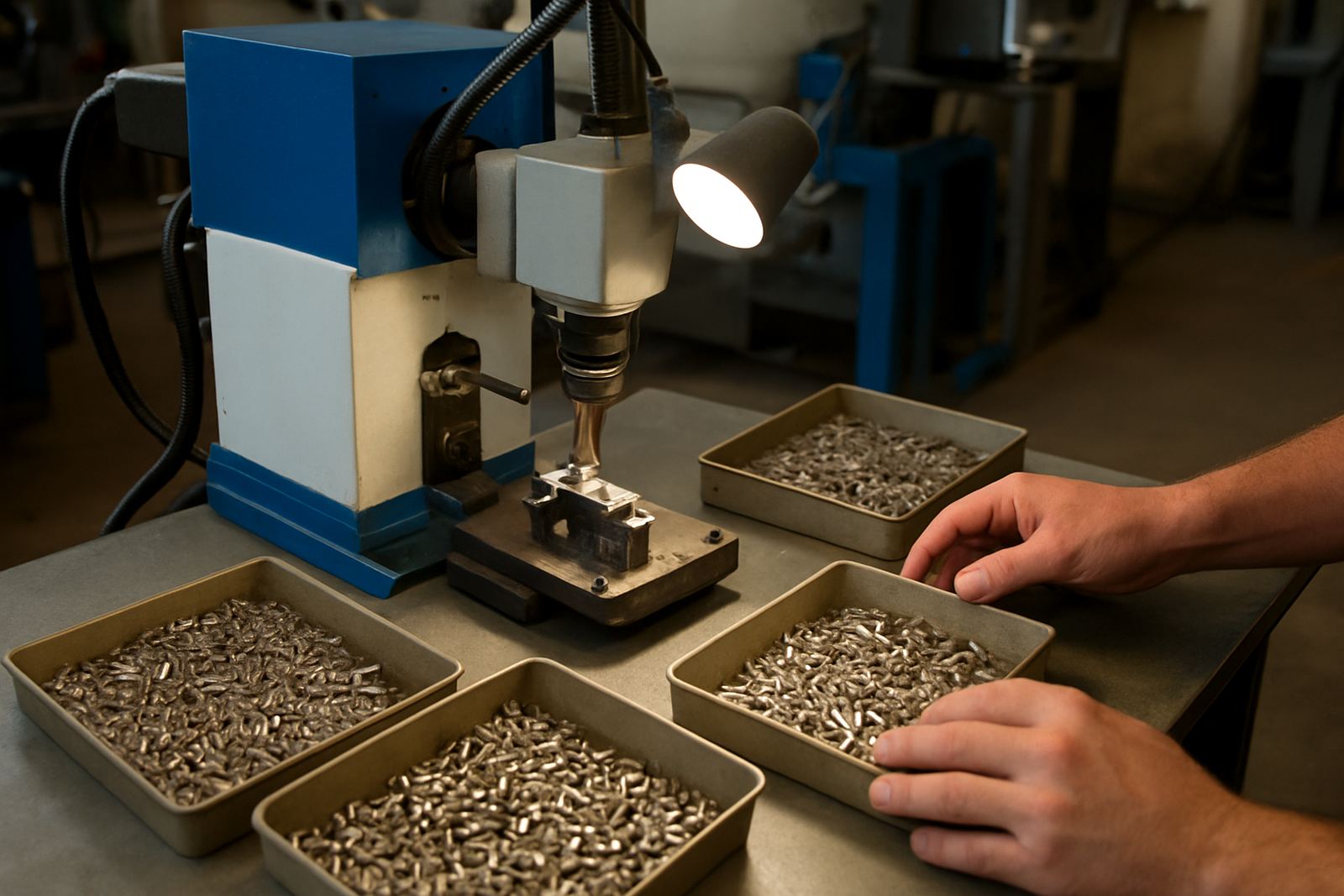
What the Micro Part Cell is built to do
The Micro Part Cell is arranged for parts that are too small or too delicate for general workshop handling. It gives the operator a controlled working area for jewellery-sized components, precision tools, thin wall sections, medical-style hardware, instrument parts, and tiny mould details. The aim is simple: keep the part stable, keep the weld pool small, and keep the heat affected zone under control.
This setup is useful where parts cannot be clamped roughly or moved around between stations. The workpiece is positioned with fine adjustment so the operator can work on cracks, pinholes, worn edges and small joins without overshooting the repair. In practical terms, that means less rework and fewer parts written off due to distortion.
- Suitable for parts from about 1 mm up to small assemblies that still need delicate control
- Designed for precision repairs, joining and build up on compact components
- Useful where the part surface finish must be preserved after welding
Sizes and set-up options for different part types
The cell can be configured for bench-top work or a more enclosed workshop layout depending on the part mix and volume. For many job-shop applications, a compact footprint is enough, especially where floor space is tight in Centurion, Midrand or Pretoria East. For repeat work, the setup can be arranged with consistent part holders and simple access for load and unload.
Typical working area options are chosen around the size of the component, not the size of the machine. Small precision inserts, die details, sensor housings and thin stainless pieces need a tighter setup than general repair jobs. If the work involves batch runs, the cell can be arranged for quicker repeat positioning so each part sits in the same place every time. That saves time and reduces variation between operators.
- Compact cell layout for limited workshop space
- Extended access option for slightly larger miniature assemblies
- Custom part holders for repeatability on batch work
Where it suits best in South African workshops
This type of cell suits repair shops, small manufacturers, prototype teams, tool rooms and maintenance departments that handle fine components. It is often chosen for jobs where a full-size weld bay is overkill. In Pretoria and surrounding industrial areas, it works well for precision tooling, mould repair, stainless fittings, and thin sections that need careful build up after wear or cracking.
It also suits coastal jobs when parts come back with corrosion, pitting or contamination from humidity and salt air. Small components can be particularly unforgiving because one poor pass can distort the shape or close off a feature that still needs clearance. For clients in Gauteng, North West, Mpumalanga or the coast, the cell helps keep the work controlled whether the job is dropped off, couriered in, or collected through one of our local support points.
- Tool rooms and mould maintenance
- Prototype workshops and short-run production
- Precision repair work for thin or heat-sensitive parts
Installation, power supply and workshop conditions
The Micro Part Cell is best installed on a level floor with enough space for operator movement, part staging and safe cable routing. A clean, dry area is important. Dust, grinding residue and moisture can affect visibility and part cleanliness, especially on fine welds. Where load-shedding is part of daily operations, stable supply planning matters too, because small precision jobs are often interrupted by power dips at the worst time.
Power needs depend on the welding unit and support equipment fitted to the cell. In most workshops the system runs from a standard industrial single phase or three phase supply, with a protected circuit and proper earthing. If gas shielding is used, the supply point should be positioned so the hose run stays short and tidy. A dry inert gas feed is normally required for clean welds on stainless and aluminium, and the regulator setup should be checked for leaks before any fine work starts.
- Level surface, good lighting and clear access around the cell
- Stable electrical supply with proper earthing and protection
- Dry shielding gas supply where the job requires it
Care, servicing and daily handling
Because the cell is used for miniature work, small contamination issues can become big problems. Lenses, covers, fixtures and work clamps should be kept clean and checked before each shift. A quick wipe-down of the working area and a proper inspection of alignment points will save time later. If the cell is being used on stainless or aluminium repairs, any residue from previous jobs should be removed so the next part does not pick up dirt or oxide marks.
Regular servicing should include beam path checks, cleaning of optics, inspection of seals and verification of the part positioning system. On busy job-shop work, especially when there are mixed materials and fast turnarounds, it pays to set a maintenance routine instead of waiting for a fault. Small alignment errors can make a repair look acceptable at first, then fail during finishing or fit-up. That is why the cell should be checked for repeatability at set intervals.
- Clean optics and covers frequently
- Check clamps, guides and fixtures for wear
- Service alignment and gas delivery on a routine schedule
What to check before you place an order
Before ordering a Micro Part Cell, send through clear part samples, drawings or close photos with dimensions. The important details are the smallest feature size, material type, thickness, how the part is held during the job, and whether the weld is for repair or joining. It also helps to know if the part must keep a polished finish, if there are tight tolerances, and whether any previous heat damage has already altered the component.
You should also note how the work will reach the workshop, whether by courier, collection from Midrand or local drop-off in Centurion or Pretoria East. For batch work, tell us the expected quantity and turnaround needed. A small typo on a drawing can be sorted early, but a wrong assumption about wall thickness or alloy type can waste time and material. The more complete the information, the better the cell can be set for the job.
- Part dimensions and minimum feature size
- Material type and thickness
- Quantity, turnaround and delivery method
Key facts
| Working purpose | Micro-scale laser welding, repair and part joining |
|---|---|
| Typical part range | Very small components, thin sections and precision inserts |
| Positioning | Fine adjustment fixture for stable handling |
| Power | Industrial electrical supply with proper earthing |
| Gas requirement | Dry shielding gas where required by material and finish |
| Best suited for | Repair workshops, tool rooms, prototyping and batch job work |