When a mould needs local maintenance instead of full rework
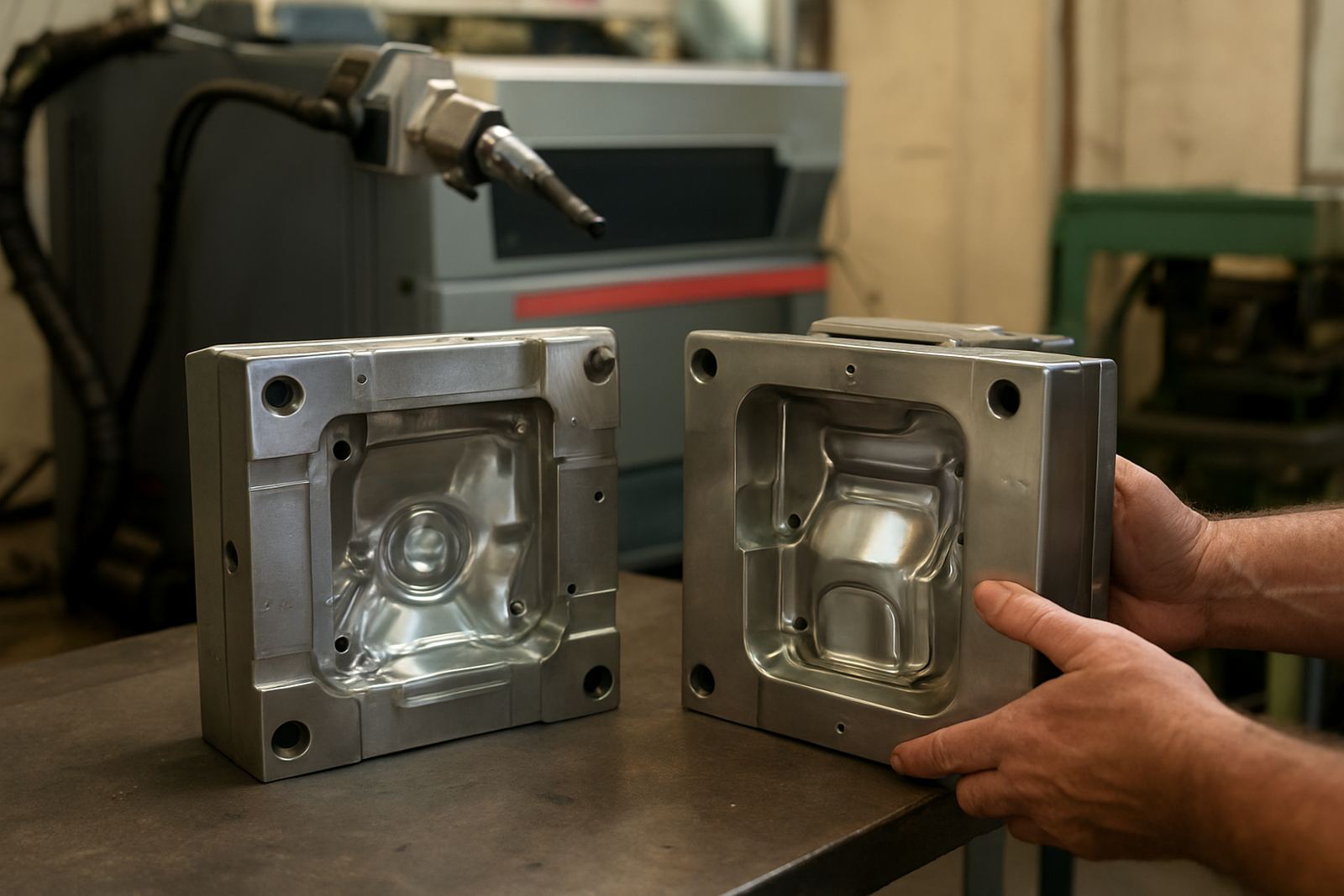
Mould maintenance usually starts with small defects that grow into bigger problems. A sharp edge rounds off, a cavity picks up a nick, a shut-off face starts to mark, or a thin section shows heat wear after repeated cycles. On injection and compression tools, those defects can affect part release, flash, finish and cycle consistency. In many cases the mould is still sound, it only needs accurate local repair so it can return to production without a full strip and rebuild.
For customers in Pretoria, Centurion, Rosslyn and Midrand, the common trigger is downtime pressure. A tool may still be running, but the parts are showing mismatch, sink at the edge, or a change in part weight. Rather than welding broad areas and then machining everything back, laser work lets us target the damaged zone only. That saves steel, time and in many cases avoids changing the whole tool geometry.
We also see moulds that have been repaired before with too much heat input. Those jobs often arrive with distortion, soft edges or marks that show the repair was too aggressive. In humid coastal conditions, rust can add another layer of damage, and if the mould has been stored through load-shedding periods, condensation can make the surface worse. The right maintenance approach starts with a proper look at what is worn, what is cracked and what must stay untouched.
What we repair on moulds day to day
The most common mould maintenance work is on high-wear and high-precision areas. These are the places where a small defect can affect release, fit or appearance. The work is often done on tool steel, stainless inserts and selected aluminium tooling parts, depending on the application and the heat sensitivity of the part.
- Mould edges that chip or round off after repeated closure
- Shut-off surfaces showing galling, wear or light impact damage
- Cavities with pits, corners or local erosion
- Gate areas that have cracked or broken down from repeated use
- Slide interfaces and insert faces needing small build-up repairs
- Prototype moulds that require repeat fixes during development runs
We also handle parting line damage where flash starts appearing in one section only. That type of fault is often traced back to a tiny low spot or a worn corner rather than a major structural issue. A precise fill and re-cut can put the tool back in line without changing the rest of the mould. For batch tools and production inserts, that is often the most cost-effective route.
Workshop set-up for accurate mould repair
Mould repair work starts with clean access and proper preparation. The tool needs to be stripped enough for the damaged area to be reached safely, but not so much that good components are disturbed for no reason. We usually want the insert, cavity block or affected section cleaned of release agent, oil and carbon before any welding starts. If the repair area is still contaminated, the weld will show it straight away.
Typical equipment for this kind of job includes precision laser welding equipment, magnification for detail work, clamping fixtures, fine measuring tools and controlled cleaning methods. For smaller mould parts, the job can be handled on the bench. For heavier sections, we plan lifting and support so the workpiece sits stable during the repair. That matters because even a small movement can change the line on an edge or put a bevel out by a fraction.
Where the job is sensitive to heat, we keep the repair local and measured. This helps on parts that carry existing polish, texture or close tolerances. It also reduces the risk of pulling a mould out of square. If the tool is going back to a machine shop for re-cutting, we coordinate the weld allowance so the machinist has enough material to finish cleanly without taking too much off.
Planning the job so the mould goes back into production cleanly
Good planning saves more money than rushing the weld and hoping the finish will sort itself out later. Before repair, we look at the tool drawing if it is available, the part fault, the material type and the final finish expected on the mould surface. A cavity that needs polishing after repair is handled differently from a hidden shut-off edge that only needs dimensional recovery.
- Confirm the steel type and any previous repair material used
- Mark the exact wear point and check how far the damage runs
- Allow for finish machining, EDM or polishing after welding
- Decide if the mould can be repaired in one visit or needs staged work
- Protect adjacent surfaces so only the damaged zone is touched
For customers in Jet Park, Pretoria East and nationwide courier jobs, this planning is important because transport time can cost as much as the repair itself if the tool has to come back twice. If the mould is part of a production line, we try to match the repair to the downtime window. That may mean repairing one insert while the rest of the tool stays in service. It may also mean doing the job in phases when the mould is too large to remove from production for long.
Common mistakes that make mould maintenance more expensive
Most expensive mould repairs start as small errors. One common mistake is overbuilding the damaged section. If too much filler is added, the machine shop must remove more material later and the original geometry can be lost. Another mistake is repairing without checking the root cause. If the mould is out of alignment, the wear will return and the same fault shows up again after a short run.
We also see repairs done without enough surface prep. Oil in a cavity, oxide on an edge or hidden cracks near the repair zone can cause the new work to fail early. On finer moulds, people sometimes skip the planning for post-weld finishing and then discover the repair allowance is too small. That can mean extra machining, polishing or even a second weld cycle. None of that helps the budget.
Another issue is ignoring the surrounding tooling. If a shut-off face is repaired but the matching face is not checked, the mould may still flash. If an insert is welded but the guide or slide is worn, the repaired area will take new strain as soon as the tool returns to work. The best result comes from looking at the whole working area not just the visible defect.
Budget ranges in Rand for mould maintenance work
Costs depend on the size of the damaged area, the material, the amount of cleaning needed and whether the repair needs follow-up machining or polishing. Small local repairs on one edge or corner can be far more affordable than replacing an insert, especially when the tool is otherwise in good condition. Bigger cavity build-ups or multiple damage points take more time and setup.
As a working guide, simple local mould maintenance jobs may start from about R1,500 to R3,500 for very small repairs. Mid-range work on a cavity, gate area or shut-off section often falls between R3,500 and R9,500. More involved repairs that need multiple build-ups, careful finishing or additional workshop time can run from R10,000 to R25,000 and above. Courier and collection costs are usually separate, and urgent turnaround can affect the total.
If the tool is in Centurion, Midrand or Pretoria and can be delivered to the workshop, that usually keeps transport costs lower. For nationwide jobs, we can work from clear photos, measurements and a short fault note before collection. That helps avoid surprises once the mould arrives. In practice, a well planned repair is almost always cheaper than running the tool until the damage spreads.
What to send us before the mould comes in
The more detail we get up front, the faster we can confirm the repair route. A quick photo of the worn area, the mould type and the affected material is a good start. If you have a sample part, that helps too because it shows whether the issue is dimensional, visual or both. We also like to know if the tool is used for short runs, batch production or repeated daily cycles.
- Photos of the damaged area from close range and wider angles
- Any drawings, old repair notes or measurements available
- The mould material if known
- Whether the issue is flash, poor release, wear or breakage
- Target turnaround and whether courier collection is needed
Our Centurion workshop handles local drop-offs, and we support jobs from Pretoria East, Rosslyn, Jet Park and further afield through courier. For mould maintenance, the main aim is to return a tool that works properly and keeps working. That means accurate repair, proper finish and a clean handover back to production.