Start With A Clean, Dry Part
Before you wrap anything, make sure the part is free of oil, loose swarf and grinding dust. If a component has cutting fluid, moisture or coolant on it, dry it first. This matters even more for stainless, aluminium and fine machined parts, because trapped moisture can leave marks or affect inspection. For parts coming from coastal areas such as Durban or Gqeberha, add a dry cloth wipe and pack soon after cleaning to avoid surface tarnish.
If a crack repair or edge build up has been done, handle the area with care. Freshly repaired sections can pick up nicks from rough packaging, especially on thin section work and mould components. Do not stack parts directly on top of each other unless each one is separated properly.
Protect Every Edge, Corner And Face
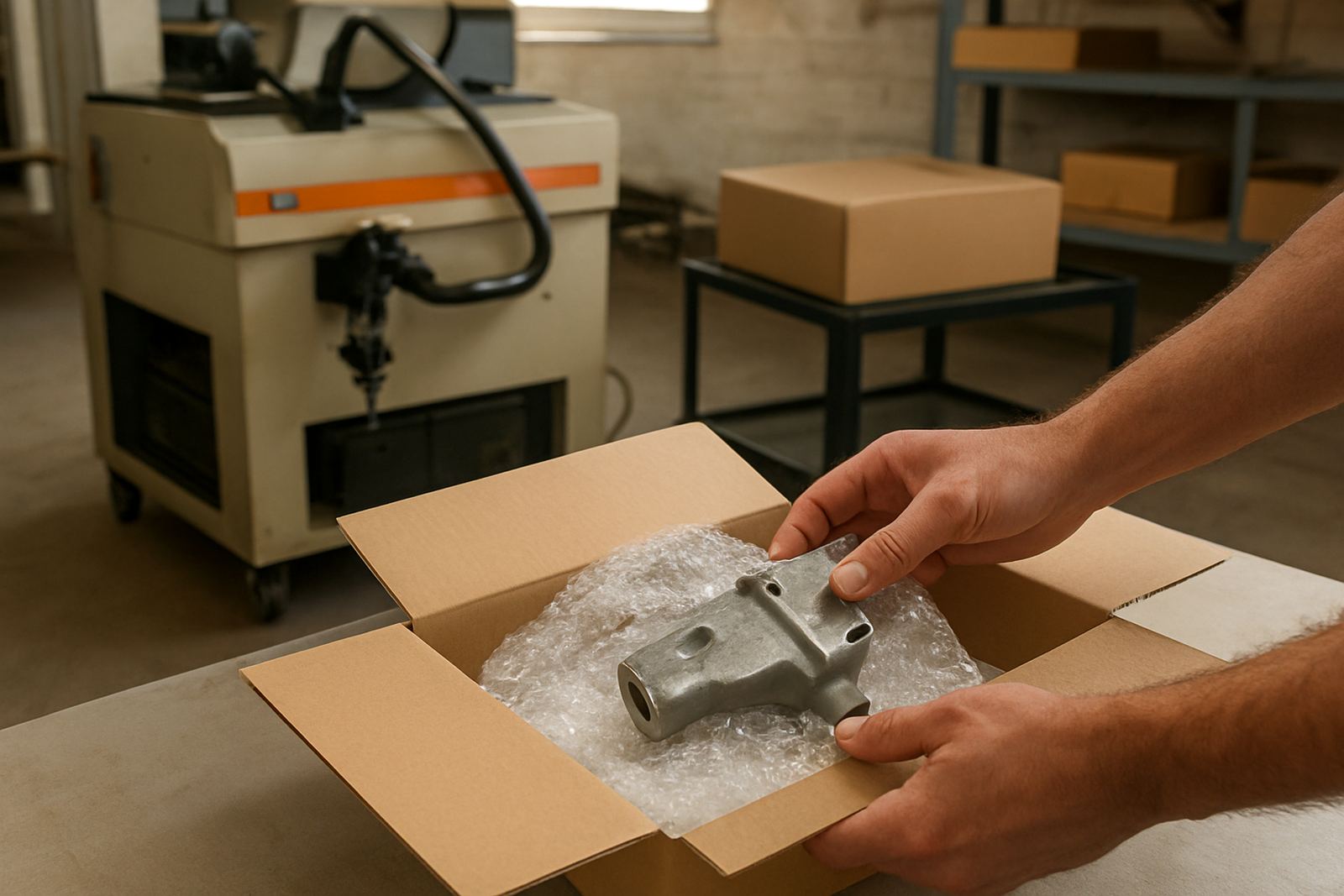
The best packing starts with a soft first layer. Use bubble wrap, foam sheet, clean cloth or corrugated board around each item. Cover sharp corners, threads, drilled holes and polished faces. If a part has a machined sealing surface, place a flat sheet over it before wrapping. Small parts can move around in a box and rub through thinner wrapping, so use enough padding to keep each item from shifting.
- Wrap each part separately where possible.
- Use corner protection on square and rectangular items.
- Keep repaired areas from touching one another.
- Seal loose fittings, pins and inserts in a labelled bag.
For multiple parts from a batch job, pack items by type and size, then separate layers with cardboard or foam. It takes a few extra minutes but saves time at receiving and reduces the chance of mix ups.
Choose A Box That Can Take The Weight
A light carton is not enough for steel, stainless or thick aluminium sections. Use a strong box, a crate, or a double wall carton that matches the weight and size of your item. If the part has awkward protrusions, a crate is usually safer. For local deliveries around Pretoria, Centurion and Midrand, boxes still need to hold up to van loading, stacking and repeated handling. A box that feels fine in the workshop can fail once it is moved through a depot or courier hub.
Fill all empty spaces so the part cannot slide. Use crumpled paper, foam blocks or cardboard offcuts. Avoid leaving a hollow space around the item, because that allows movement and impact. A box with a gap on one side is far more likely to split at the corners.
Label Fragile Repairs And Special Instructions Clearly
Mark the parcel clearly on the outside and inside of the box. If there are faces that must stay flat, sides that must not be clamped, or areas that should not be lifted by hand, say so plainly. Add your name, company, contact number and job reference on the box and on a card inside the package. If the parcel is going by courier to our Centurion base, include the delivery note with the sender details and the collection area, especially if it is coming from Rosslyn, Jet Park or further afield.
- Write the job reference on at least two sides of the box.
- Mark any top side clearly.
- Add handling notes such as fragile, this way up or keep dry.
- Include a copy of your contact details inside the parcel.
Keep the wording simple and direct. Handlers move quickly, so clear marking is better than long notes.
Pack For Courier, Local Drop Off Or Nationwide Collection
If you are sending parts through a courier, assume the parcel will be loaded and offloaded several times. Use extra padding, stronger tape and a secure outer layer. For local drop offs at our Centurion Workshop, Pretoria East Support or Midrand Collections points, you still need a proper box because items are often carried by hand across yards, loading bays and workshop floors. KwaZulu-Natal humidity and inland dust both create their own packing problems, so the goal is the same: keep the part stable and dry.
For nationwide jobs, avoid oversize boxes if you can. Long thin boxes are more likely to bend, and small heavy parcels are easier to secure. If a part is especially valuable, ask for a crate or custom packed solution before sending it. That saves time and reduces risk before the work even starts.
Before You Send It, Check These Final Points
A quick final check can prevent delays. Make sure all loose items are bagged, the box is sealed, and the address details are correct. If the part has a known issue, note it on the job card or delivery note so the technician can inspect the right area first. For items needing close dimensional work or restoration, accurate marking helps us identify the part quickly and keeps the workflow moving.
- Seal the box with strong packing tape across all main seams.
- Test that the contents do not move when the box is gently shaken.
- Keep heavy parts at the bottom of the carton or crate.
- Do not use damaged boxes for valuable parts.
If in doubt, pack it heavier than you think you need to. A little extra protection is cheaper than replacing a damaged part and redoing the job. When your parts arrive in good condition, we can start on the welding and repair work without avoidable delays.