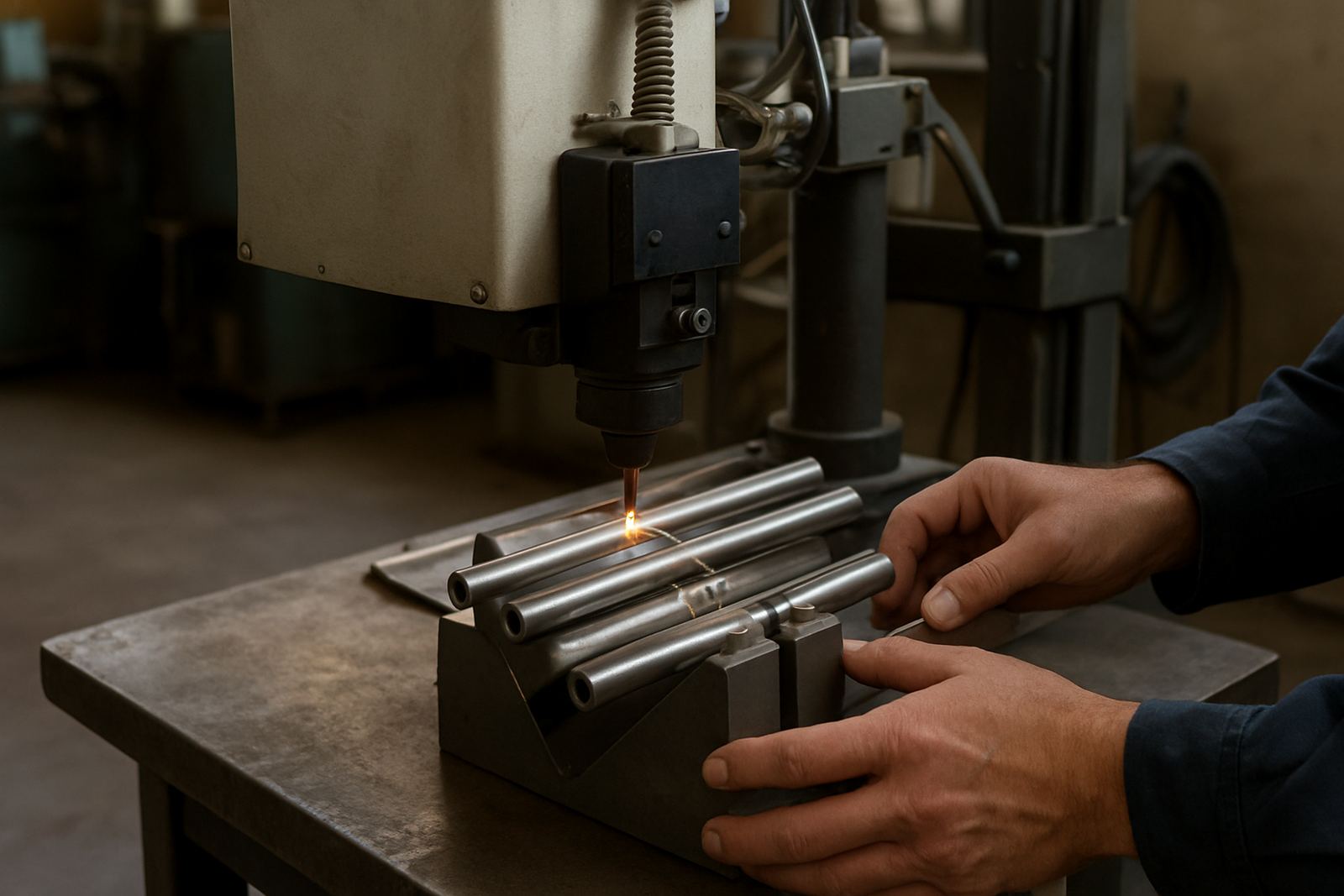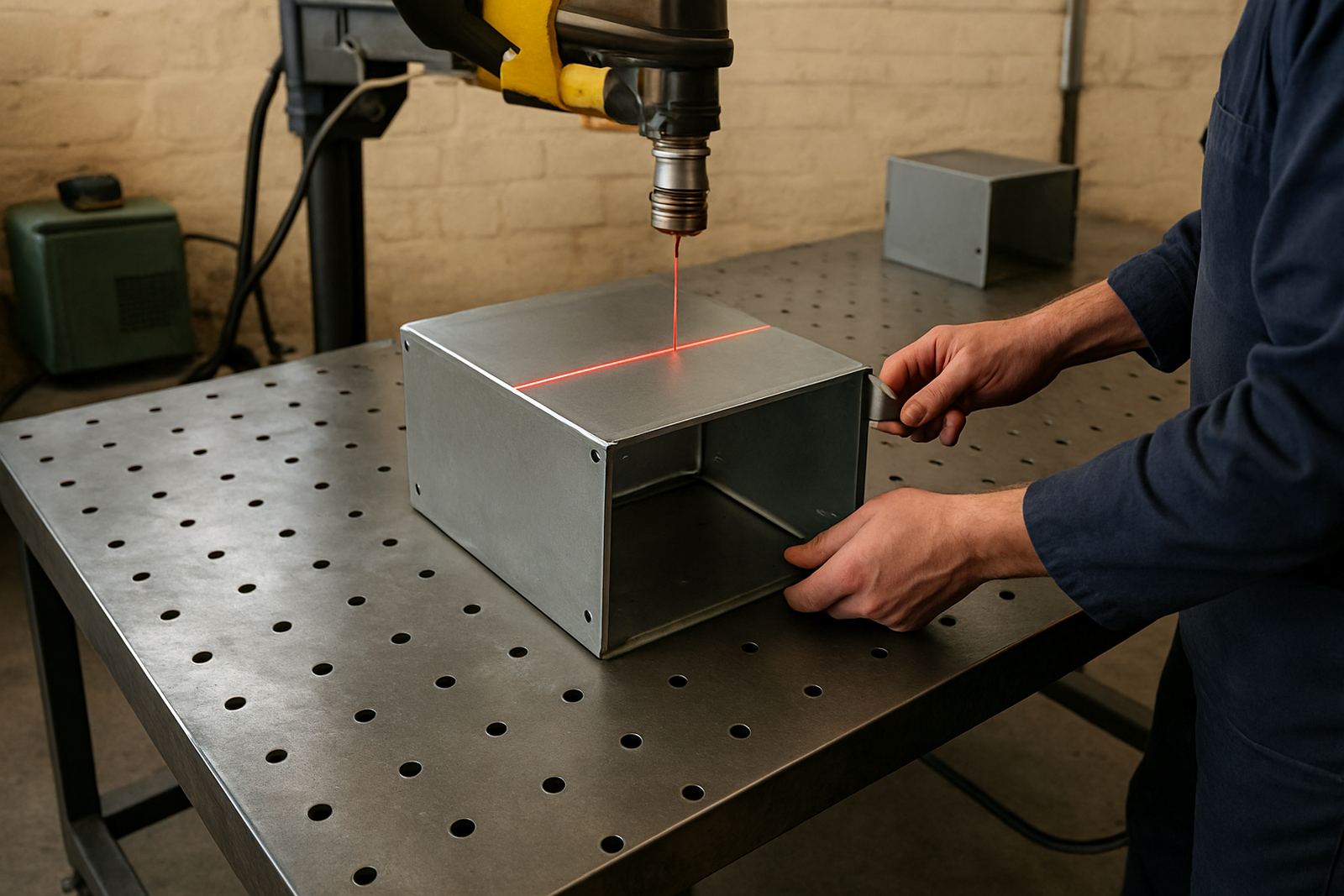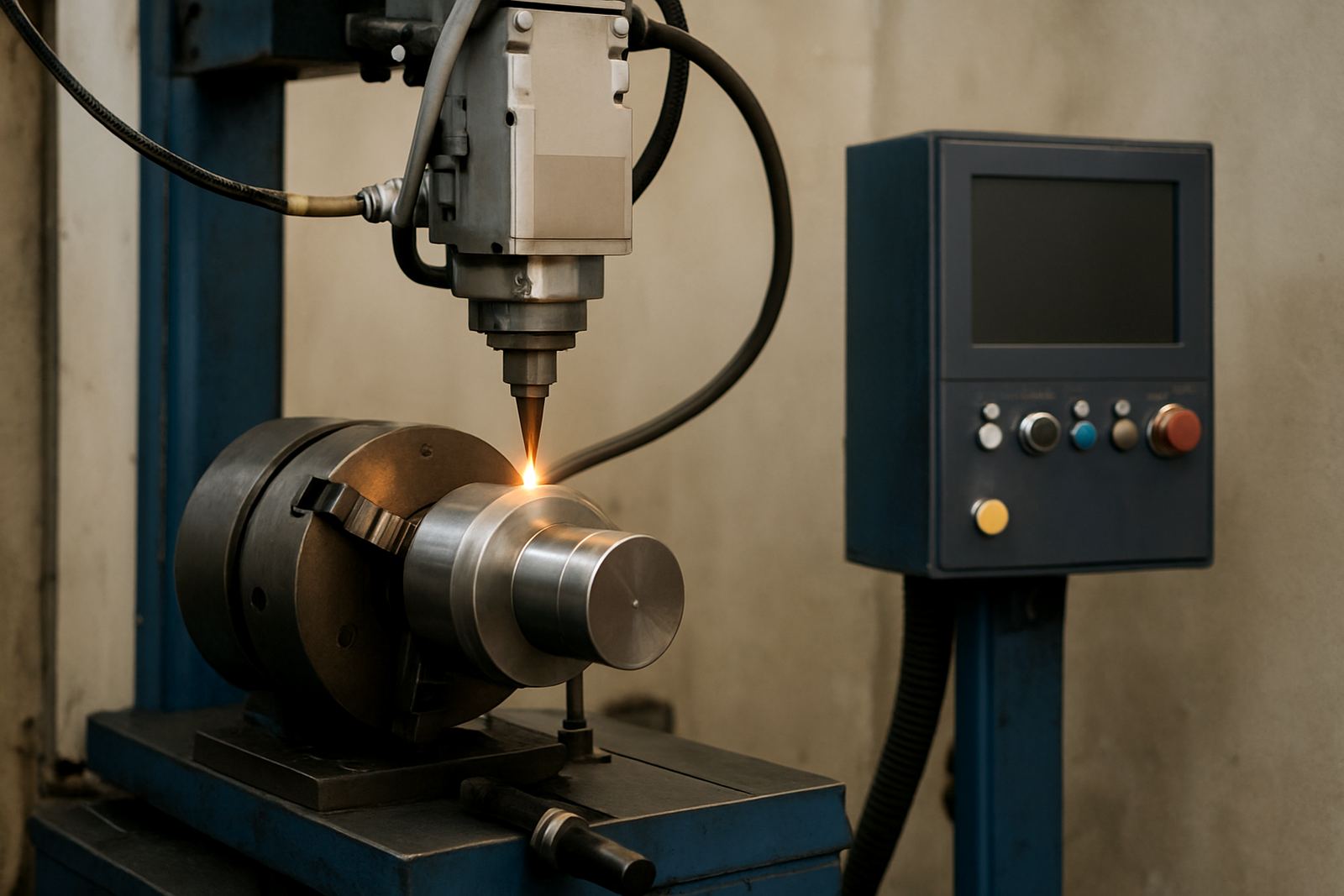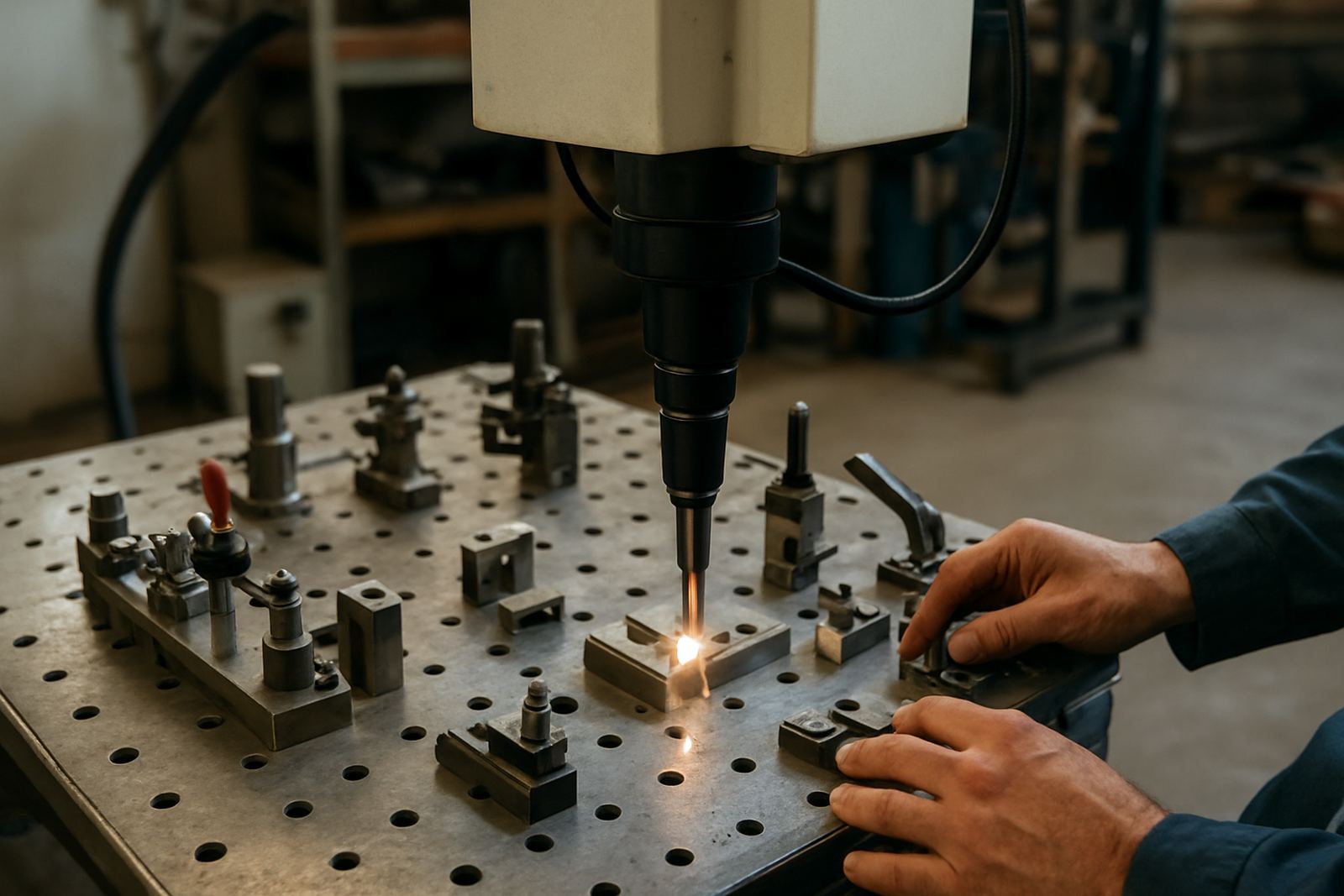
What a Fixture Table Cell does on the shop floor
A fixture table cell is a standardised flat-table station used to support components at a fixed height and position during laser welding and related precision work. In simple terms, it is the controlled base that lets the technician clamp, locate and return parts to the same place every time. That matters when you are repairing a cracked mould section, joining thin stainless parts, or building up edges on small components where even a slight shift can throw off the finished result.
For job-shop work, the table cell is useful because it cuts down on re-setting time and helps maintain consistency from one part to the next. It is especially helpful where a customer sends in repeat work from Pretoria, Centurion, Midrand or farther afield, and the same geometry must be preserved across multiple pieces. On sensitive parts, accurate support also reduces the risk of distortion from heat and handling.
Standard sizes, layout options and working capacity
Fixture table cells are usually supplied in practical, workshop-friendly sizes rather than one fixed format. The right choice depends on the part size, the weight of the component, and how many clamps or location points are needed for the job. Smaller cells suit precision repairs and prototype joining, while larger tables are better for batch jobshop welding and multi-part setups.
Common layout choices include grid-hole tops, slot-based clamping surfaces, adjustable supports and repeatable stop points. Some cells are arranged for compact bench work, while others are built to handle bigger assemblies in a manufacturing environment. The table surface should be flat enough for accurate location and strong enough to hold jigs without flexing under load.
- Compact cell for small precision parts and repairs
- Mid-size cell for mould and die work, edge build up and prototype parts
- Larger cell for batch runs and repeat setups
- Adjustable stops, clamps and locating pins for repeatability
If the work involves narrow sections or mixed materials like aluminium and stainless steel, the cell must allow for careful access around the joint area. A well planned setup keeps the torch path clear while still holding the part firmly in position. That is where proper fixturing saves time, and often a second rework pass too.
Where this setup suits best
This type of table suits any workshop that handles precision parts, repair work or short production runs. It is commonly used for laser welding on mould inserts, fine brackets, machine parts, instrument housings, small fabricated items and restoration pieces. It also works well when a part has a damaged edge or cracked section that needs to be held square before material is added back.
For clients in Centurion and Pretoria East, the table cell supports fast turnaround on local work that can be dropped off or collected. For Midrand, Rosslyn and Jet Park, it is useful where repeat jobs need the same setup to be copied across several parts. Nationwide, it suits couriered work because the part can be checked, clamped and processed with minimal handling once it arrives.
- Precision laser welding on small and medium components
- Crack repair on worn or damaged sections
- Thin section welding where movement must be controlled
- Batch work where repeatability matters
- Prototype parts that may need several setup changes
Installation, power and workshop requirements
A fixture table cell does not normally need heavy installation, but it should be placed on a level floor and positioned so the operator has clear access from all sides needed for the job. The support frame must stand square and not rock under load. In a busy workshop, the area should also allow enough space for part loading, clamping, inspection and safe movement around the station.
Power needs are usually modest for the table itself, but the full welding cell may include lighting, extraction, measurement tools and ancillary equipment. If the workspace uses compressed air or shielding gas for related operations, line routing should be tidy and protected from trip hazards. In Pretoria and across Gauteng, load-shedding means it is worth checking whether backup power is available for lights, extraction and any control equipment that must stay on during a job.
Good ventilation is important, especially for stainless work and for parts that carry residues, oils or coatings. Coastal humidity is less of an issue in Centurion than on the east coast, but stored clamps and steel accessories still benefit from dry, covered storage to keep surfaces clean and ready for use.
Care, cleaning and routine servicing
The table surface should be kept flat, clean and free of weld spatter, grit and swarf. Any build-up around locating holes or clamp points can affect repeat accuracy. After each job, wipe the surface down and check that stops, pins and clamps are sitting correctly. If a part has been tack welded or heat affected, remove any residue before the next setup so the next job is not carried over with an error.
Routine servicing is mostly about inspection and prevention. Check for wear on threaded holes, loose fasteners, damaged stops and any signs of surface distortion. If a jig or fixture has taken a knock during handling, recheck it before the next production run. A small fault can cost time later, especially on parts that must match exactly.
- Clean the table after every shift where possible
- Lubricate moving parts only where required and keep excess oil off the working face
- Inspect clamps, pins and stops for wear
- Store accessories in labelled containers to avoid mix-ups
- Recheck flatness after heavy work or accidental impact
What to confirm when ordering a fixture table cell
Before ordering or using a fixture table cell for a specific job, confirm the part size, material type, weight and the repeat accuracy required. You should also know whether the work needs one-off repair support, ongoing batch production support, or a setup that can be changed quickly between jobs. Those details determine the right table size, clamping pattern and accessory layout.
It helps to check access around the component, especially if the weld must be reached from several angles. Thin stainless, aluminium repairs and mould work often need different support points. If the part is delicate, ask whether soft jaws, sacrificial plates or special location blocks are needed to prevent marking. For couriered jobs, clear photos and measurements make setup quicker on arrival and reduce back-and-forth.
When in doubt, send a sketch, sample part or full dimensions with the job request. That lets the workshop confirm whether the fixture table cell can handle the part safely and whether any extra supports are needed. For customers sending work into Centurion or arranging collection from Pretoria, Midrand or Rosslyn, exact dimensions usually save the most time.
Key facts
| Product type | Standardised flat-table fixture cell for precision welding and repeat setups |
|---|---|
| Typical table sizes | Compact, mid-size and large format options available for different part envelopes |
| Working surface | Flat steel support surface with repeat location points, clamp slots or grid-hole layout |
| Load support | Suitable for light precision parts through to heavier small assemblies, depending on configuration |
| Utilities | May be used alongside extraction, lighting, compressed air and shielding gas systems |
| Best use | Laser welding, repair work, batch jobs, prototype joining and accurate part hold-down |