Indexed Rotation For Clean Circumferential Welds
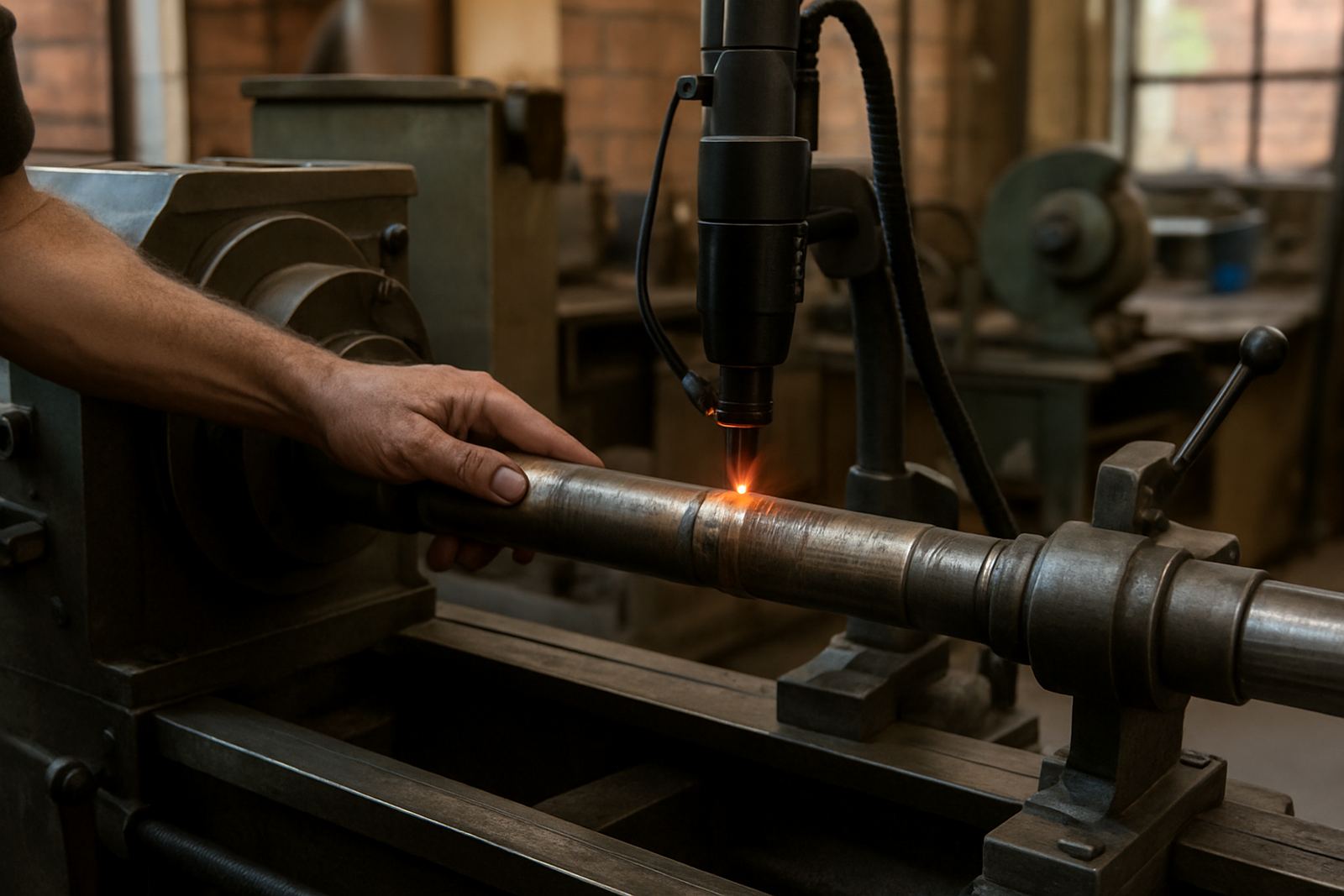
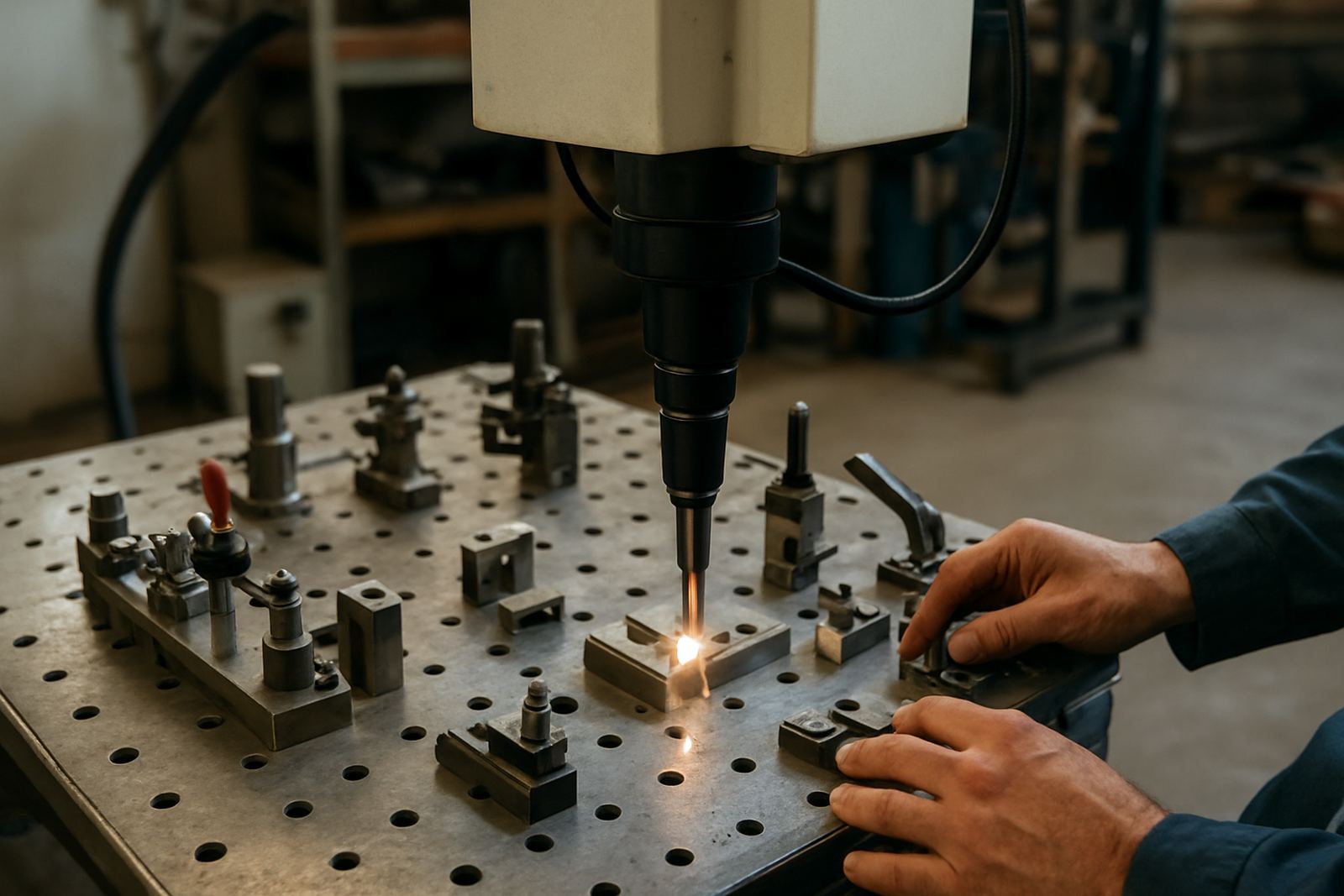
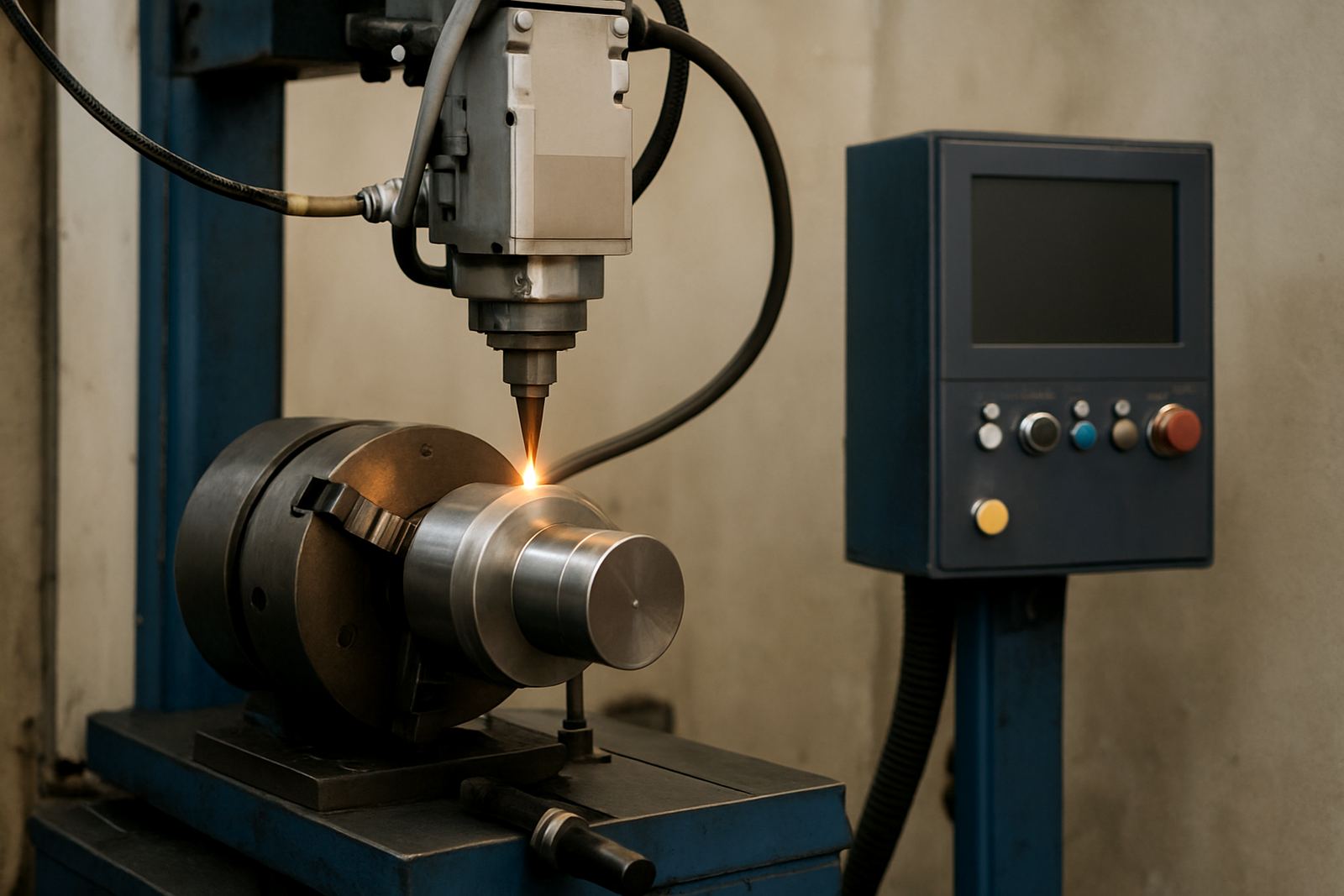
A Rotary Weld Cell holds a cylindrical part and turns it through a set angle while the operator or weld head works on the joint. That indexed movement helps keep the weld line even around the full diameter, especially on thin sections where heat has to be managed carefully. It is commonly used for rings, tubes, sleeves, flanges and repair builds where a hand-held approach can wander.
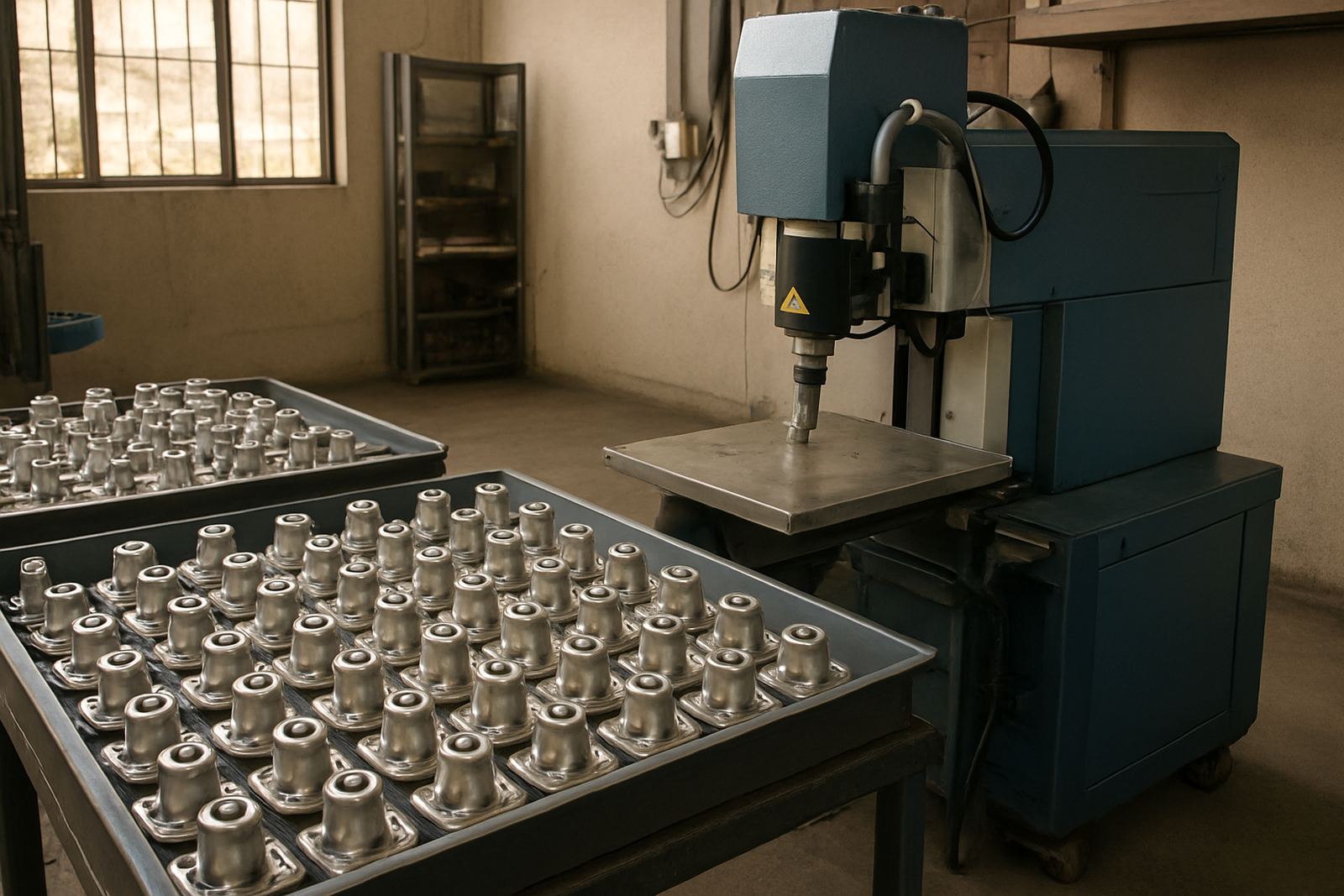
In our Centurion workshop, this type of setup is chosen when the job needs repeatability and a tidy finish. It is useful for one-off repairs as well as short batch runs, and it handles parts that must stay true after welding. For many customers, the big advantage is simple: less distortion, better alignment and less time spent cleaning up after the weld.
- Indexed rotation for controlled joint progression
- Improved consistency on round parts
- Suitable for repair work and small production runs
Typical Components And Jobs It Suits
This cell is best suited to parts that can be mounted securely and rotated without excessive run-out. That includes precision sleeves, small pressure-related parts, wear rings, thin-wall tubing, machine inserts, spacer rings and restore jobs where a crack or worn edge runs around the circumference. On site, customers often bring items that have been damaged by fatigue, poor fitment, vibration or repeated thermal cycling.
It is also practical for prototype work where the final geometry may still change, because indexed rotation lets the technician make controlled passes without overworking the material. In many cases, it is used alongside edge build up, crack repair or part restoration, depending on the base material and the state of the component.
- Round parts with a consistent joint line
- Small batch repair and restoration work
- Prototype components that need precise handling
Size Options And Work Envelope
Rotary Weld Cells can be configured for small precision parts through to larger cylindrical components, as long as the item can be supported safely and balanced properly. The exact working envelope depends on the chuck or fixture size, tail support, and the space needed for torch access. As a guide, common setups are used for parts from about 20 mm up to 600 mm in outside diameter, with lengths from short rings to shafts and sleeves over 1 metre where support allows.
When you are ordering, the important measurements are the outside diameter, inside diameter where applicable, the overall length, and the location of the weld. If the component is uneven or already distorted, we need that noted too. A part that looks simple can still need custom holding, and it is better to check these figures first rather than find out on the day that the fixture wont suit.
- Outside diameter and overall length
- Wall thickness and material type
- Any taper, shoulder or existing damage
Power, Gas And Workshop Setup Needs
The cell itself is normally set up for workshop use in a clean, dry area with stable power and safe access around the fixture. In Centurion and Pretoria, load-shedding planning matters, so customers should ask about backup arrangements if the job is time-sensitive. We recommend a supply that is properly protected, with enough capacity for the weld source and the rotation drive, plus earthing that is in good condition.
For gas shielding, the exact requirement depends on the material and weld process, but clean, dry shielding gas is essential for consistent results. Stainless steel, aluminium and certain repair alloys need correct gas coverage and sensible draught control. If the shop is open to the weather or affected by coastal humidity on courier jobs, the parts should be stored properly before welding to avoid moisture contamination.
- Stable mains supply with suitable protection
- Clean shielding gas supply and correct regulators
- Dry storage and draught control around the work area
How It Is Serviced And Kept Accurate
Like any precision cell, the Rotary Weld Cell works best when the rotation system, bearings, clamps and alignment points are kept clean and checked regularly. Metal dust, spatter and fine grinding residue can build up over time, so the fixture area should be wiped down and inspected after use. If the rotation feels tight, inconsistent or noisy, it should be looked at before the next job.
We recommend scheduled checks on the indexing accuracy, fixture play, cable condition and gas lines. On job-shop work this saves time later because a small fault in the turning mechanism can affect bead placement and put unnecessary stress on the part. Service intervals depend on usage, but for busy workshop environments a monthly visual check and periodic calibration review is good practice.
- Clean fixtures and rotation points after use
- Check indexing accuracy and clamp wear
- Inspect cables, gas lines and earthing regularly
What To Confirm Before You Order
Before ordering or booking a job on a Rotary Weld Cell, confirm the material, diameter, wall thickness and weld length. Also note whether the part is new, cracked, worn or already distorted. If the component will be welded after machining, tell us the tolerance that must be protected so the setup can be matched correctly.
You should also let us know if the job is for one part, a small batch, or repeat work across several sites. For nationwide courier jobs, proper packing matters because a knocked fixture face or bent shaft can affect the result before the part even reaches the workshop. If you are in Rosslyn, Jet Park, Midrand or Pretoria East, collection arrangements can be discussed around the load and turnaround required.
- Material type and part condition
- Diameter, length and weld position
- Urgency, quantity and collection or courier details
Key facts
| Product type | Indexed rotary welding cell for circumferential work |
|---|---|
| Rotation control | Indexed rotation with repeatable positioning |
| Typical part size | About 20 mm to 600 mm outside diameter, depending on fixture |
| Supported materials | Mild steel, stainless steel, aluminium and selected repair alloys |
| Power needs | Workshop supply with protection and good earthing |
| Use cases | Precision welding, crack repair, edge build up, restoration and batch job work |