What the Shaft Repair Cell is built to do
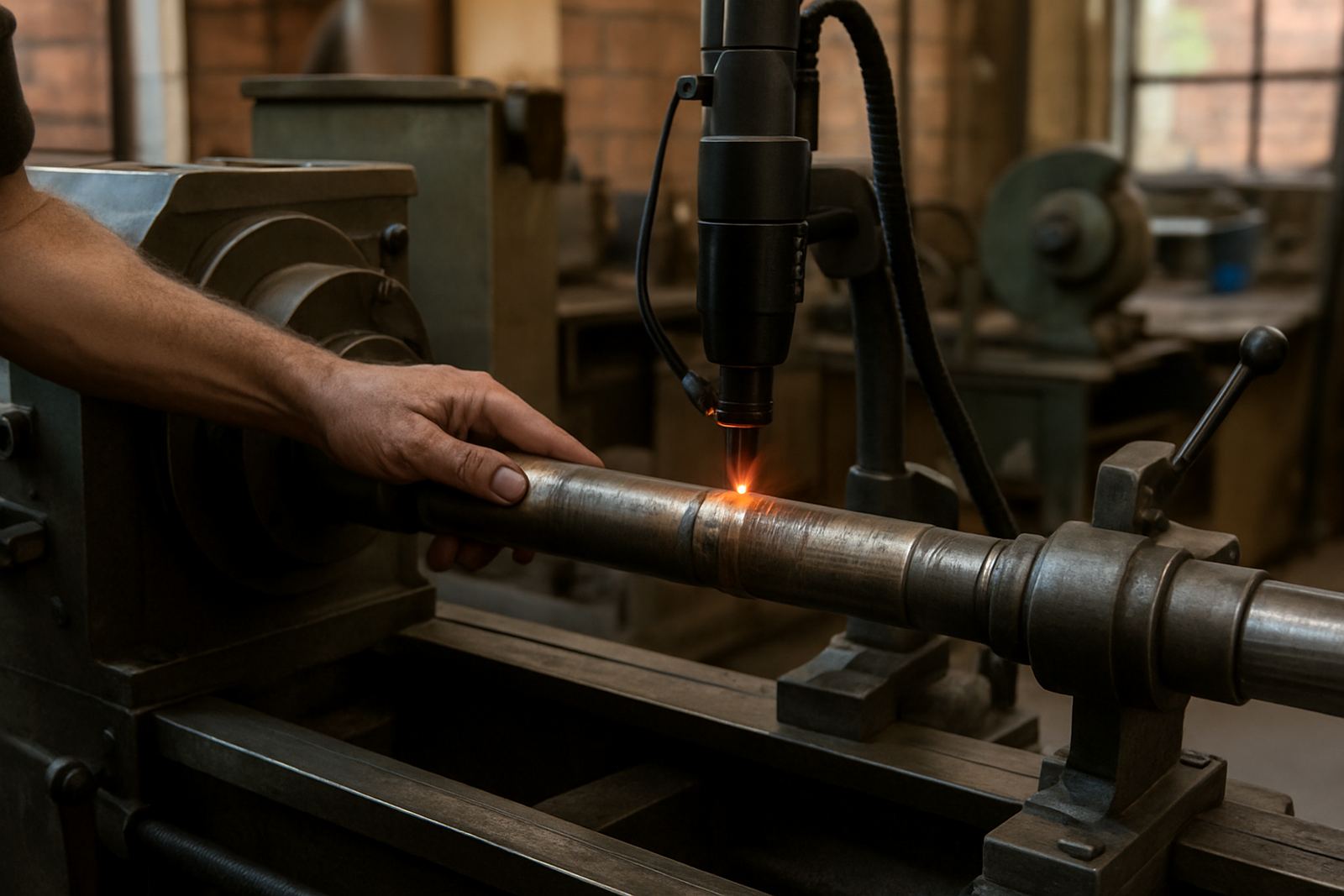
The Shaft Repair Cell is a controlled repair setup for round components that have worn journals, chipped edges, fatigue cracks or minor scoring. It allows localised laser welding on the damaged area only, so the part can be brought back to size without putting excess heat through the full shaft. That matters on precision parts where straightness, concentricity and surface condition must stay within tolerance.
We use the cell for build up on bearing seats, keyway edges, seal lands, shoulders and small diameter sections. It is also suited to parts that would otherwise be costly to remake, especially when lead times are tight and the machine line cannot wait. In many cases the work can be done faster than sourcing a full replacement, and with far less downtime.
- Localised build up on worn diameter sections
- Crack repair on round precision parts
- Restoration of damaged shoulders and edges
- Small batch jobshop repair work
Sizes and part types we handle
The cell is arranged for compact to medium shaft work, with handling based on part mass, length and access to the damaged area. We commonly repair shafts from small instrument size parts up to heavier industrial pieces that can be safely mounted and rotated for accurate welding. Final suitability depends on the material, crack depth, distortion risk and the finish size required after machining.
Round parts from the mining, motor repair, packaging, automation and general engineering sectors are often good candidates. This includes pump shafts, roller shafts, spindle sections, couplings, sleeves, bushes, non critical tooling parts and prototype components. If a shaft has seen coastal humidity, wash bay exposure or long service in dusty plant rooms, the cell is often a good option because the repair can be focused exactly where needed.
- Shafts, spindle sections and round bars
- Seal lands, journals and bearing surfaces
- Worn collars, shoulders and ends
- Prototype and one off components
Material range and repair method
The cell is used for precision repair on a wide range of metals, including carbon steels, stainless steel grades, tool steels and selected aluminium parts where the geometry allows it. We first assess whether the issue is wear, a surface crack or deeper damage that needs more than build up. After that, the weld area is prepared, the heat input is kept local and the repaired section is built back in controlled passes.
Because this is a jobshop service, each part is handled to match the end use rather than a fixed standard process. A shaft that only needs a small amount of extra material for re machining is treated differently to a cracked component that needs careful crack stop preparation and sequenced repair. This is one reason the cell works well for parts that are too valuable to gamble on with general purpose welding. The aim is clean metal addition, low distortion and a part that machines properly afterwards. Quality checks are done before release, including visual inspection and dimensional checks where required.
Installation, power and gas requirements
The Shaft Repair Cell is a workshop based service, so the main requirement is access to the component and enough handling room for loading, rotating and measuring the part. For onsite collection or courier jobs, it helps if the shaft is cleaned of oil, grease and heavy debris before dispatch. If the part comes from a plant with strict entry rules, please advise us early so collection and sign off can be arranged without delays.
For welding work, the cell uses controlled electrical supply and shielding gas suited to the material and the repair profile. Stable power is important, especially during load shedding or generator changeovers, because consistent output helps protect the repair from unnecessary variation. If a part arrives with residual coolant, cutting fluid or corrosion, we may ask for extra cleaning before welding starts.
- Stable electricity supply or planned generator support
- Clean, dry parts with oil and coolant removed
- Clear access for lifting and turning the shaft
- Material details and final finish size if known
How the repair is finished and checked
After welding, the shaft section is normally allowed to cool in a controlled way before it goes for machining, grinding or final fitment. The finish method depends on the tolerance needed and whether the part will run in a bearing, seal or coupling arrangement. For tight applications, the repaired area is usually taken back to size with subsequent machining rather than left on weld deposit alone.
Before the job leaves the workshop, we check for surface defects, obvious distortion and enough stock for the final finishing stage. If the part is part of a larger assembly, we can advise on whether the repair should be done before stripping, after stripping, or with the mating component on hand. This avoids rework and helps keep the repair moving. Small changes in fit can make a big difference, so we are careful with measurements and don’t guess at final size.
Care, servicing and when to choose repair over replacement
Once a shaft has been repaired, it should be handled with the same care as any precision component. Keep the mating surfaces clean, avoid impact during transport and inspect the part at regular service intervals if it runs in a high vibration or abrasive environment. In coastal areas such as Durban or Gqeberha, storing the part properly after repair is important because humidity can affect bare steel very quickly.
Repair makes sense when the damage is localised, the parent metal is still sound and the part has enough wall thickness or section thickness to support build up. If a shaft has multiple cracks, severe bending or repeated failures in the same location, we will advise if replacement is the better call. That kind of straight answer saves money over the long run, and it keeps the machine from coming back in the same broken state two weeks later.
- Store repaired shafts dry and lightly protected from rust
- Check bearings, seals and alignment before refit
- Re inspect if vibration, heat or noise appears after installation
- Replace mating parts if wear caused the original failure
What to send with your order enquiry
When ordering a Shaft Repair Cell job, the more detail you give us the faster we can confirm the best process. Photos of the damage, the shaft diameter, overall length and the exact area to be repaired all help. If you know the material grade, previous service conditions and whether the part must be returned to a specific tolerance, include that too. If there is a drawing or sample measurement, send it with the enquiry.
Please also advise if the part must be collected in Centurion, Pretoria East, Midrand, Rosslyn or Jet Park, or if you want courier collection from anywhere in South Africa. For urgent work, tell us the machine down time and your target date. That lets us plan the workshop sequence properly and keep turnaround realistic. If you are unsure what to measure, we can guide you through it through our contact form.
- Part dimensions and material if known
- Clear photos of wear or cracking
- Required final size or fit class
- Collection point or courier details
Key facts
| Service type | Localised laser welding build up and crack repair |
|---|---|
| Typical parts | Shafts, journals, spindles, collars, round precision parts |
| Material range | Carbon steel, stainless steel, tool steel, selected aluminium |
| Working area | Centurion workshop with nationwide courier jobs |
| Finish options | Machining allowance, regrind allowance, fit to tolerance |
| Best for | Wear repair, crack repair, restoration and small batch jobshop work |