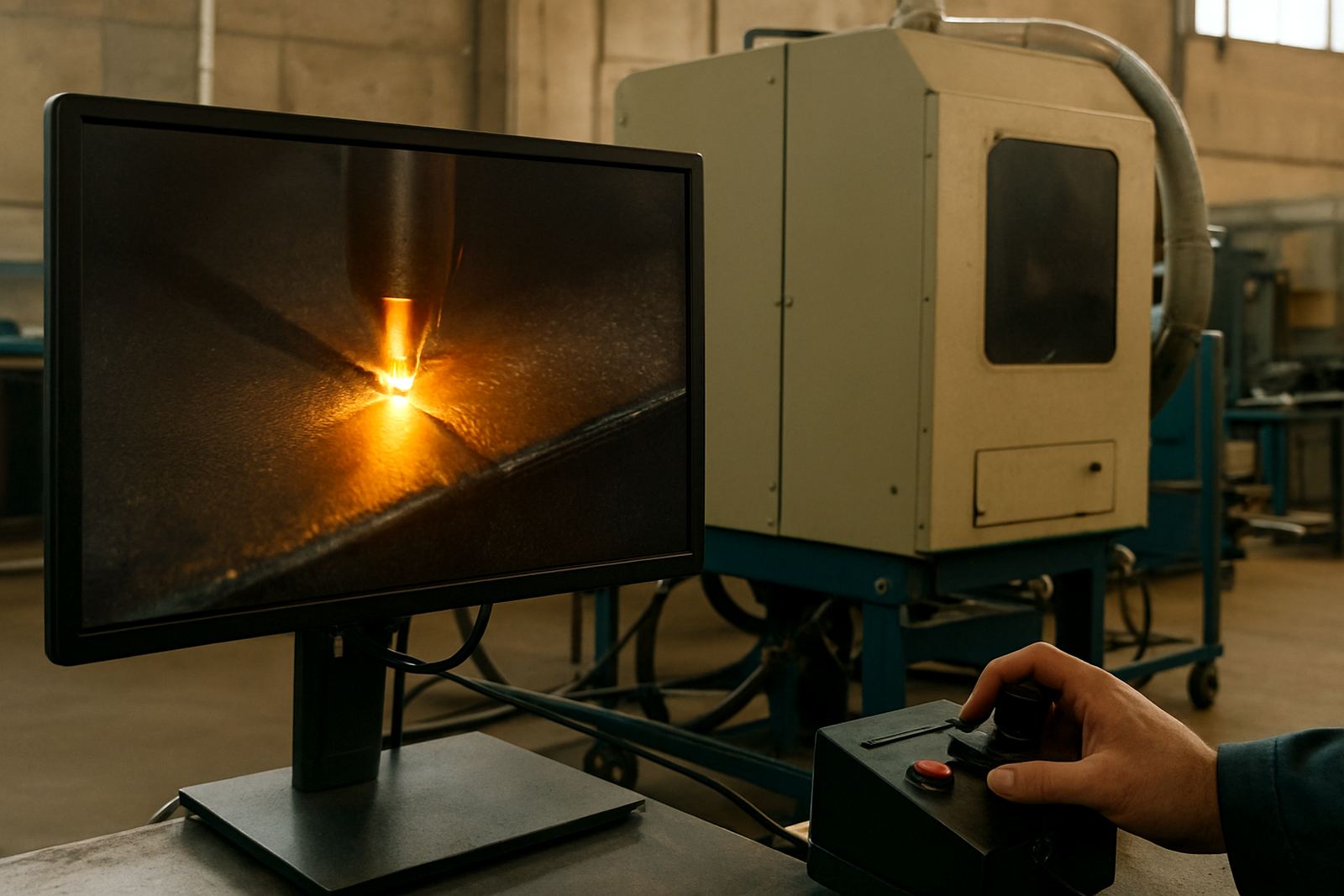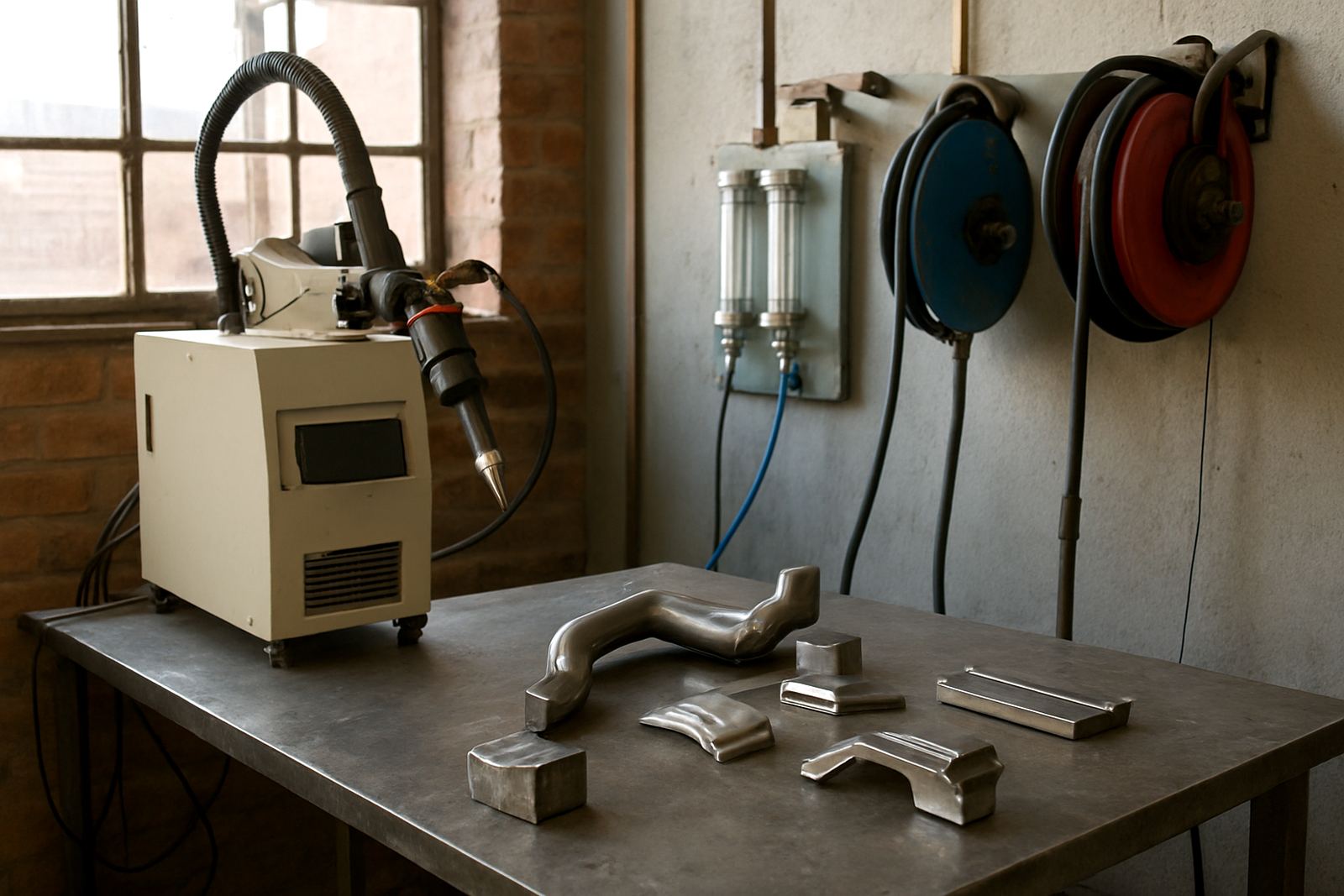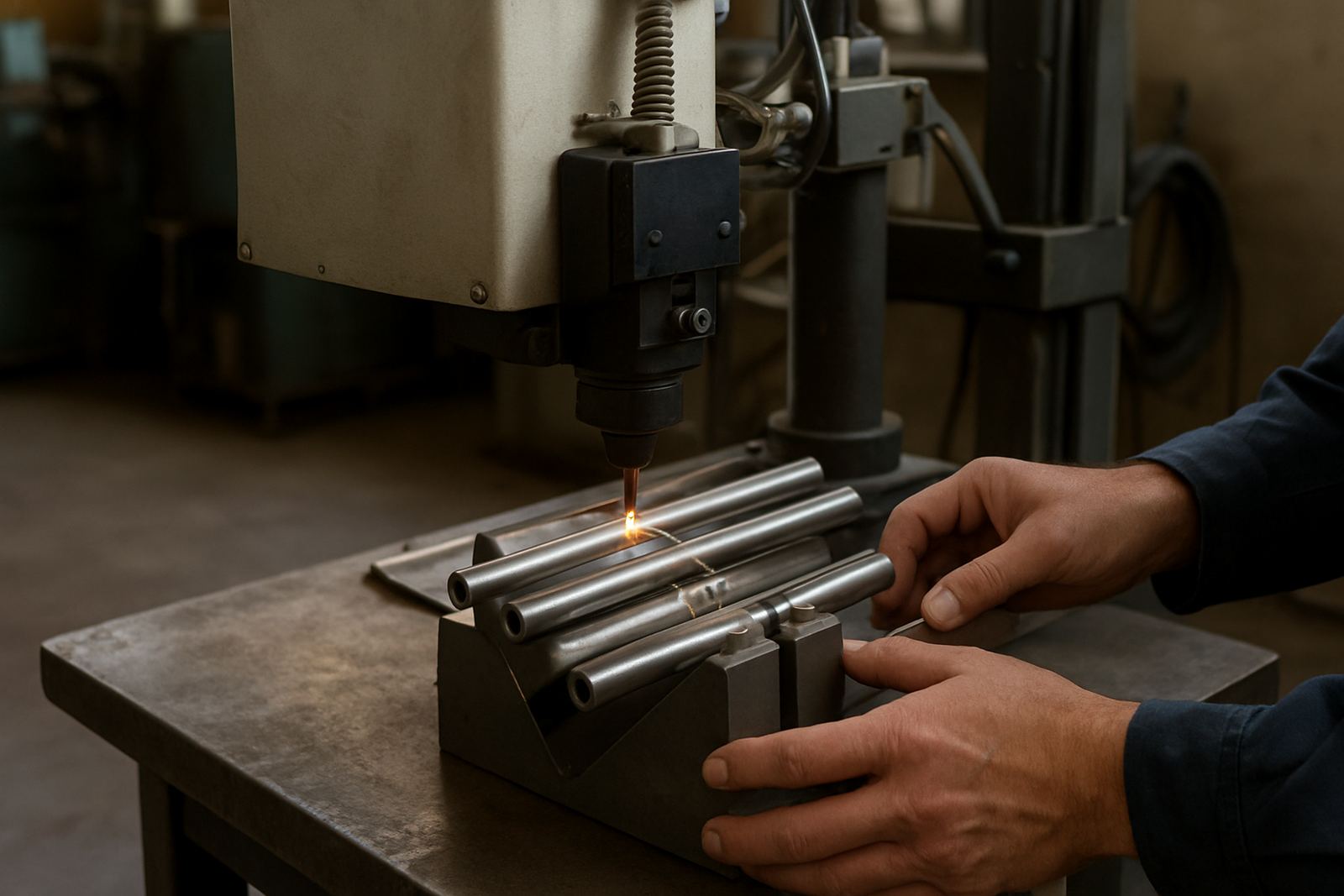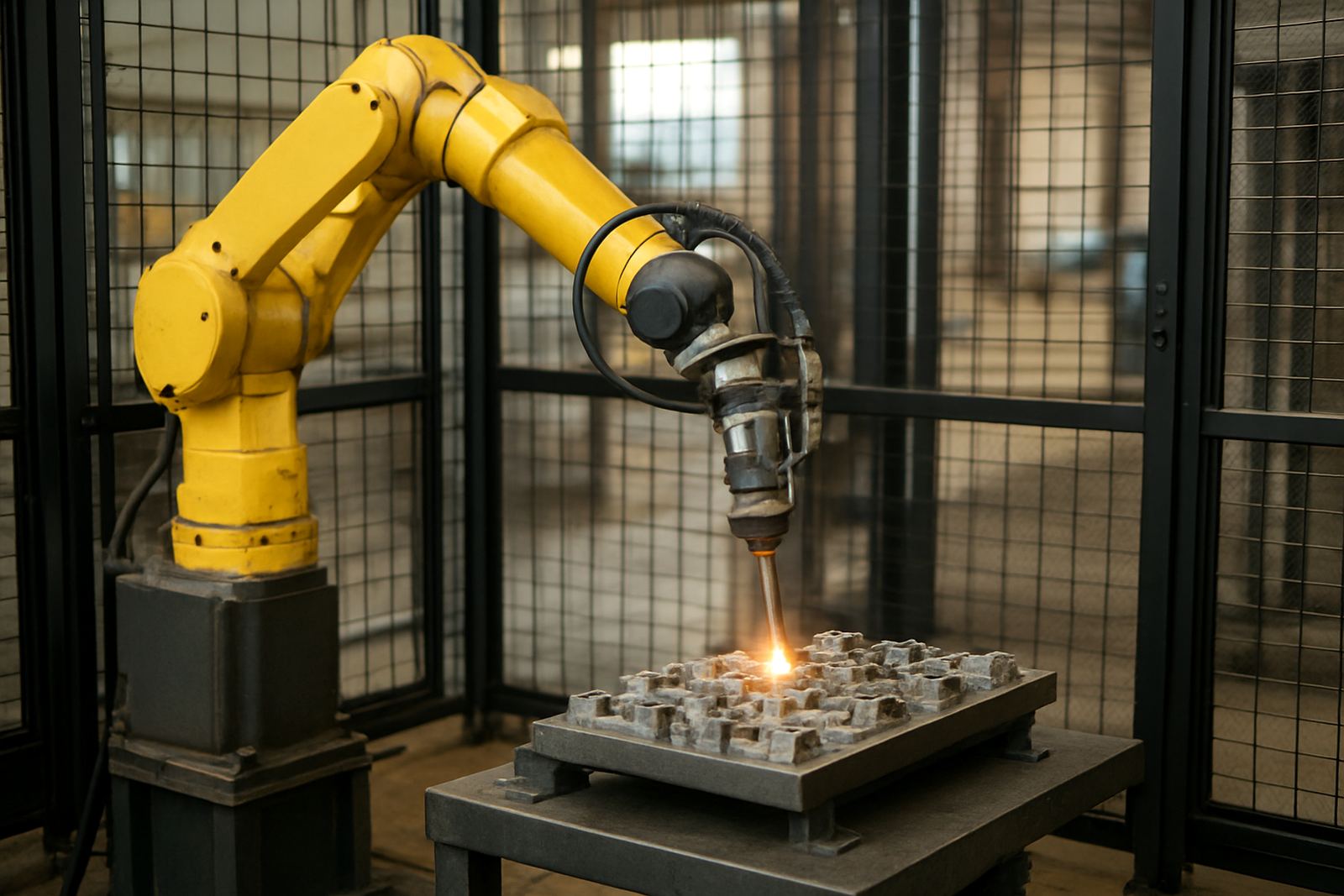
What the robot assisted cell does on the shop floor
Our robot assisted cell combines a programmed motion system with laser welding control so the torch path stays steady from the first part to the last. It is a practical choice for work that needs the same joint position, same travel speed and the same weld profile across a run of parts. That matters on items such as brackets, thin housings, formed sections and repairable components where hand work alone can lead to small changes from one piece to the next.
The cell is not for high heat, heavy fabrication. It is set up for precision work where the aim is to put down a clean, narrow weld with limited distortion. On medium-volume jobs it helps reduce rework, speeds up repeat batches and keeps dimensions under control. For customers in Pretoria, Centurion, Midrand and further afield, it is useful when parts need to be sent, processed and returned without chasing different weld results each time.
Typical sizes, working envelope and setup options
The cell can be configured to suit the part, the fixture and the required batch size. In most cases we work with parts up to 800 mm x 600 mm in the main fixture area, although the usable envelope depends on access to the joint and the shape of the component. Smaller parts can be nested in jigs for repeat loading, while longer sections may be done in staged operations if the geometry allows it.
Options include fixed jigs for one part family, changeable locators for mixed batches and hand-loaded supports for repair work. Where the job calls for it, we can set up edge build-up, crack repair or join lines on thin sections with controlled access. For some work the best result comes from a simple single-part fixture, on others a multi-cavity layout saves time and keeps labour down.
- Part sizes suited to small and medium precision components
- Single-piece or batch loading depending on job volume
- Custom fixture and locator support for repeat parts
- Suitable for short runs, repeat orders and repair sequences
Where the system suits best
This cell suits industries that want repeatable welding on parts that are too delicate for rough handling and too consistent for fully manual work. We see strong use in mould and die repair, prototype joining, precision manufacturing, stainless assemblies, aluminium repair, tooling components and batch restoration. It also works well on parts that have already had a service life and need rebuilding at a worn edge, slot or corner.
It is especially useful when the part value is higher than the scrap cost. If a component can be salvaged with a controlled weld instead of being replaced, the cell can save time and money. That is often the case with tooling, imported assemblies, legacy machine parts and items where new stock leads time is long. In humid coastal work, or plants that run with dusty air and intermittent load-shedding, the stable repeat process helps manage variation from shift to shift.
- Precision manufacturing and batch repair
- Moulds, dies and tooling elements
- Thin section parts and delicate assemblies
- Prototype parts and short-run production
Power, gas and installation needs
Installation depends on the exact cell configuration and the part sizes being processed. A clean, level floor is important, along with enough space for safe loading, unloading and part movement around the fixture. In most workshop settings we recommend dedicated floor space of at least 4 m x 5 m, with more room if the job requires trolleys, staging tables or part cleaning next to the cell.
Power supply requirements are confirmed before setup, but customers should plan for a stable single-phase or three-phase feed depending on the equipment package. Because load-shedding can interrupt production, a backup power plan is strongly advised for control equipment and any supporting systems. Shielding gas needs depend on the material and weld type, and the gas line must be clean and properly regulated. On stainless and aluminium work, gas quality is important, so we always check for moisture and leaks before a run begins. The workshop also needs fume extraction, safe screening and good lighting at the loading point.
- Level floor with clear access for operators and parts
- Stable electrical supply with backup planning for outages
- Clean, regulated shielding gas supply
- Extraction and safety screening for workshop use
Care, servicing and daily checks
Like any precision workshop system, the cell performs best when the basics are kept in order. Fixtures should be checked for wear, stops and clamps should hold square and the programmed path should be verified when a new part or batch is loaded. Small changes in part prep can alter the result, so edges should be clean, free of grease and cut to the same standard each time.
Routine care includes lens and optics checks where applicable, inspection of cables and lines, cleaning of the work area and confirming that gas flow is steady. Operators should watch for fixture drift, loose fasteners and build-up of spatter or dust around access points. If the cell is used for regular batch work, it is worth scheduling planned servicing rather than waiting for a fault to interrupt the job. A short service every few months can prevent longer downtime later on, and keeps the welds tidy.
What to check before you order
The right cell setup starts with the part drawing, the material and the expected volume. Before ordering or booking work, check the material grade, thickness range, joint style, tolerances and whether the part will be supplied clean or as a worn repair. We also need to know if the parts are heat-sensitive, polished, plated or already distorted, because that affects the setup and the welding approach.
It helps to confirm the quantity per batch, the turnaround required and whether the job will be done in one off loading point or across multiple stages. If you have sample parts, send them with clear notes on the defect or join area. For customers in Pretoria, Rosslyn, Jet Park, Midrand or via courier from elsewhere in South Africa, that upfront detail cuts back and forth and makes it easier to quote correctly. If the job is borderline between manual laser welding and robot assisted work, we will advise on the most sensible option rather than force it through the wrong process.
- Material type and thickness
- Part size, quantity and tolerance needs
- Joint style, wear area or crack location
- Surface condition, finish and any plating
Key facts
| Process type | Semi-automated robot assisted laser welding |
|---|---|
| Typical work | Repeatable paths on medium-volume precision parts |
| Working envelope | Usually up to 800 mm x 600 mm, subject to part access |
| Best suited materials | Stainless steel, aluminium and precision repairable alloys |
| Floor space | Minimum about 4 m x 5 m, more for staging and handling |
| Utilities | Stable electrical supply, clean shielding gas, extraction and screening |