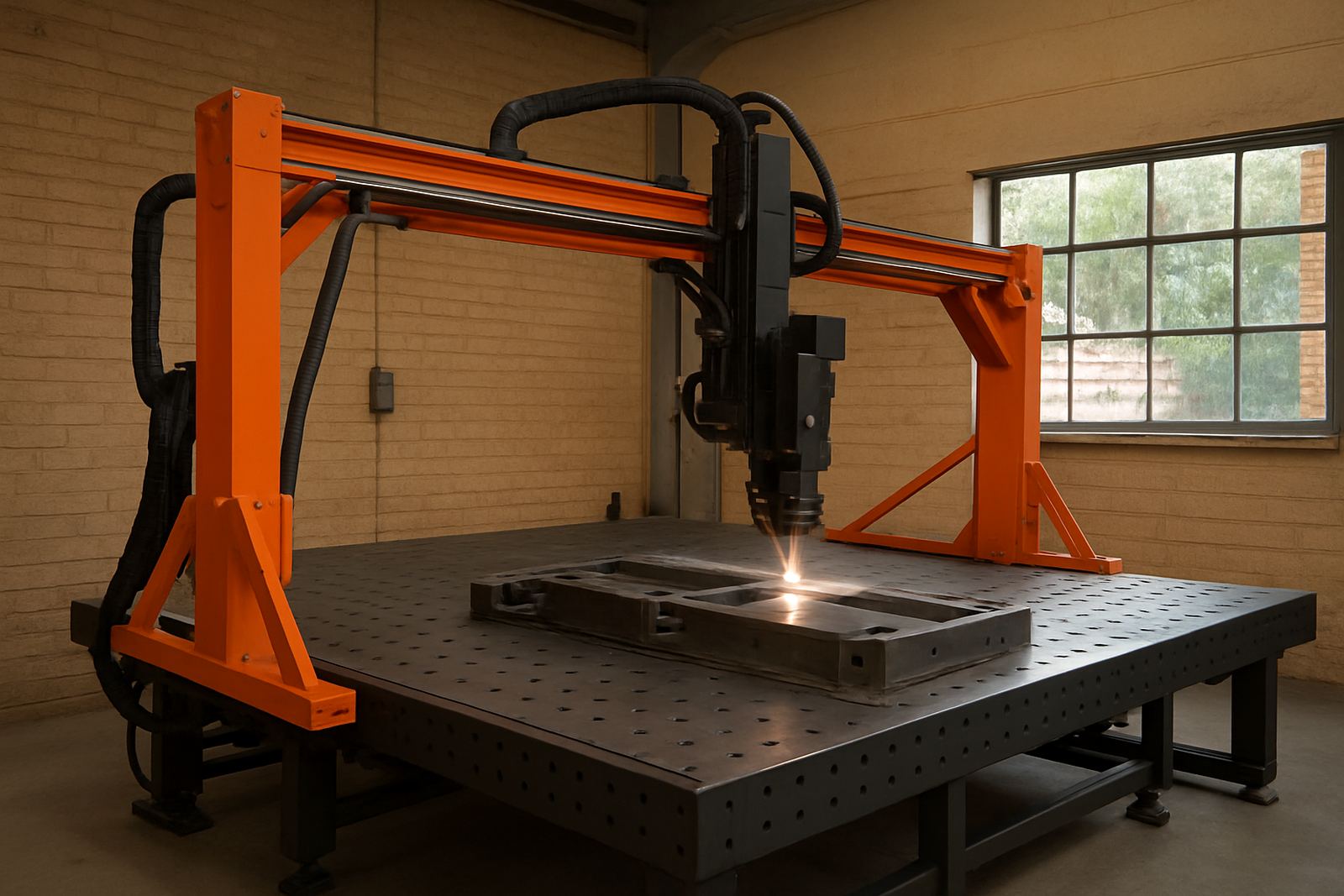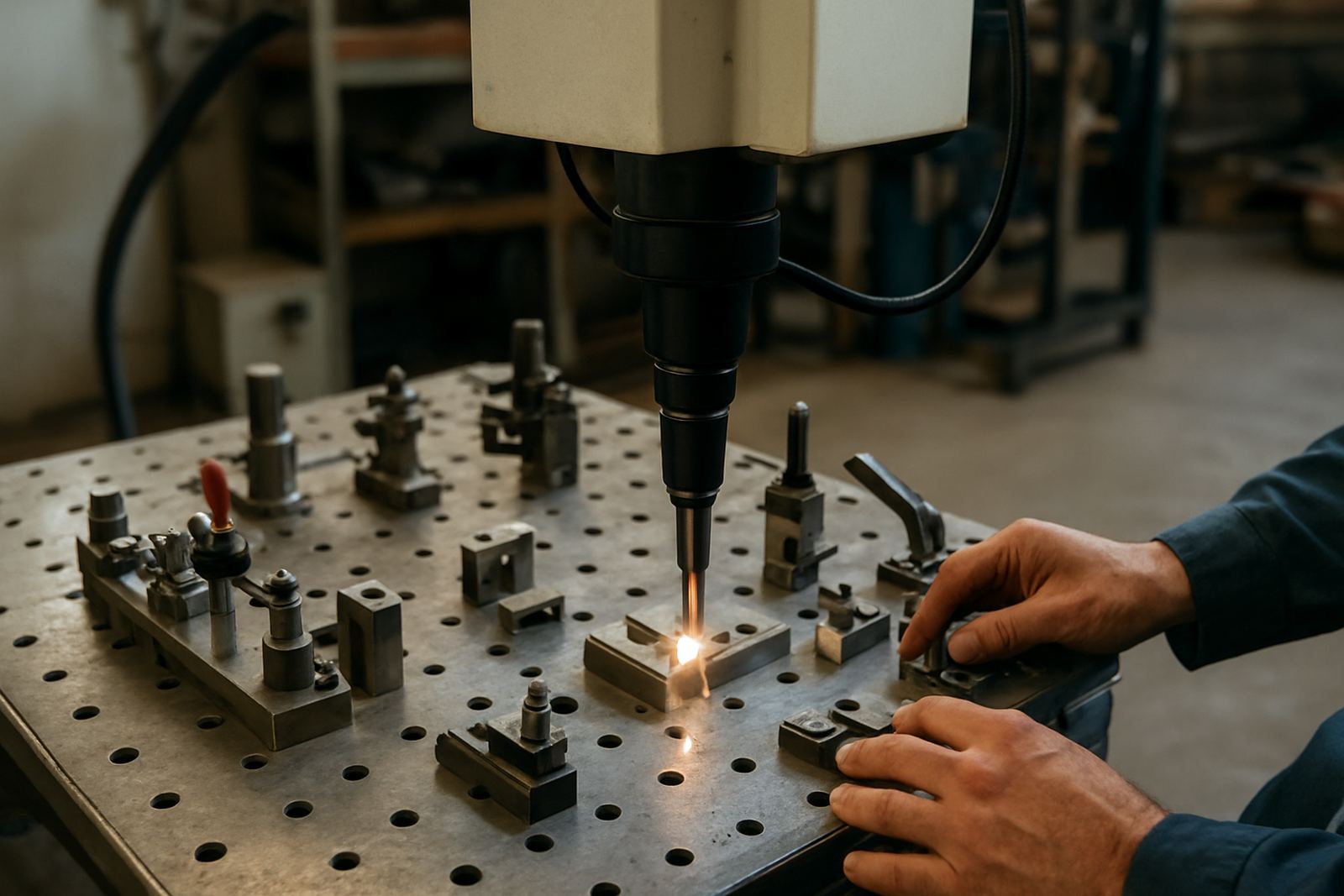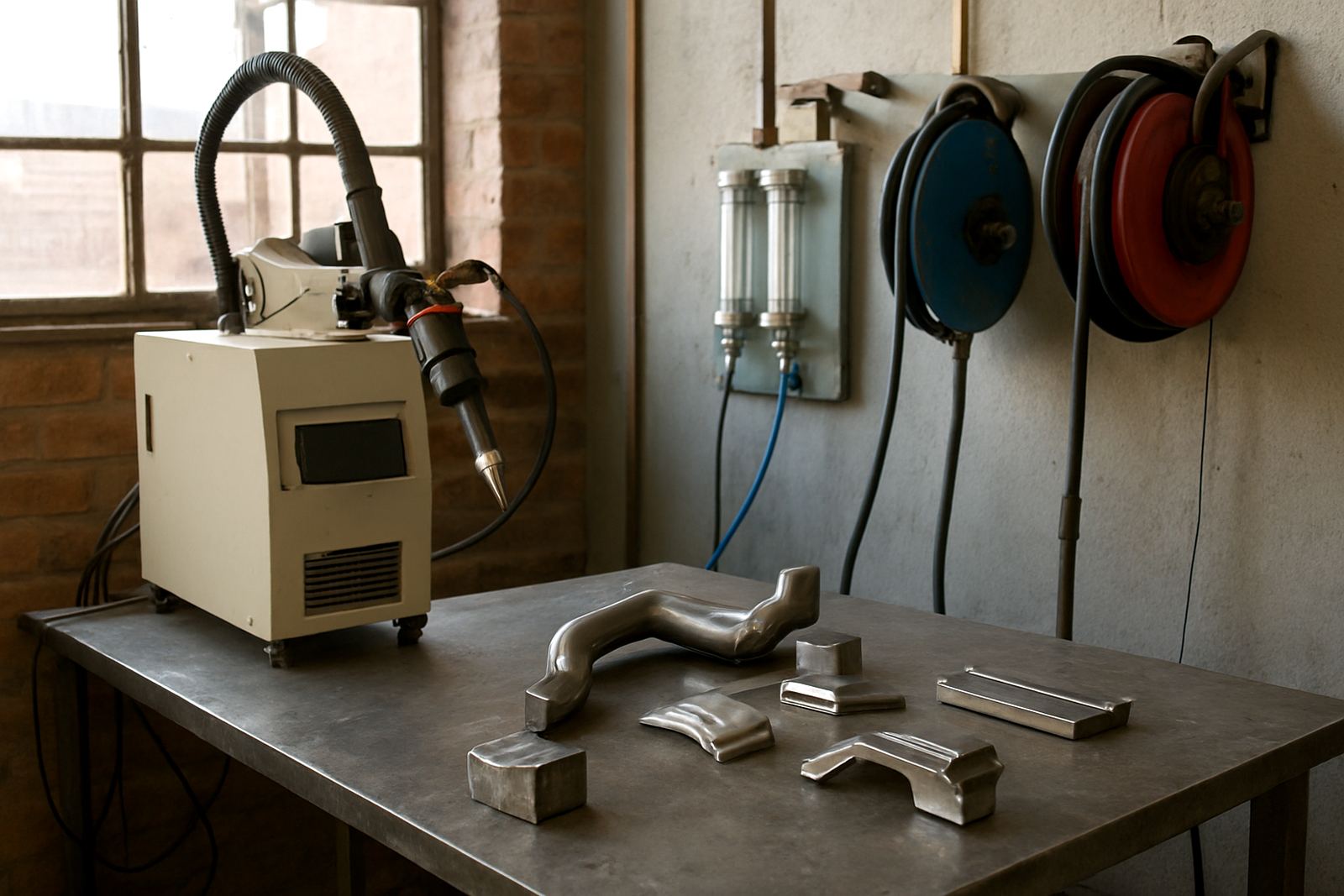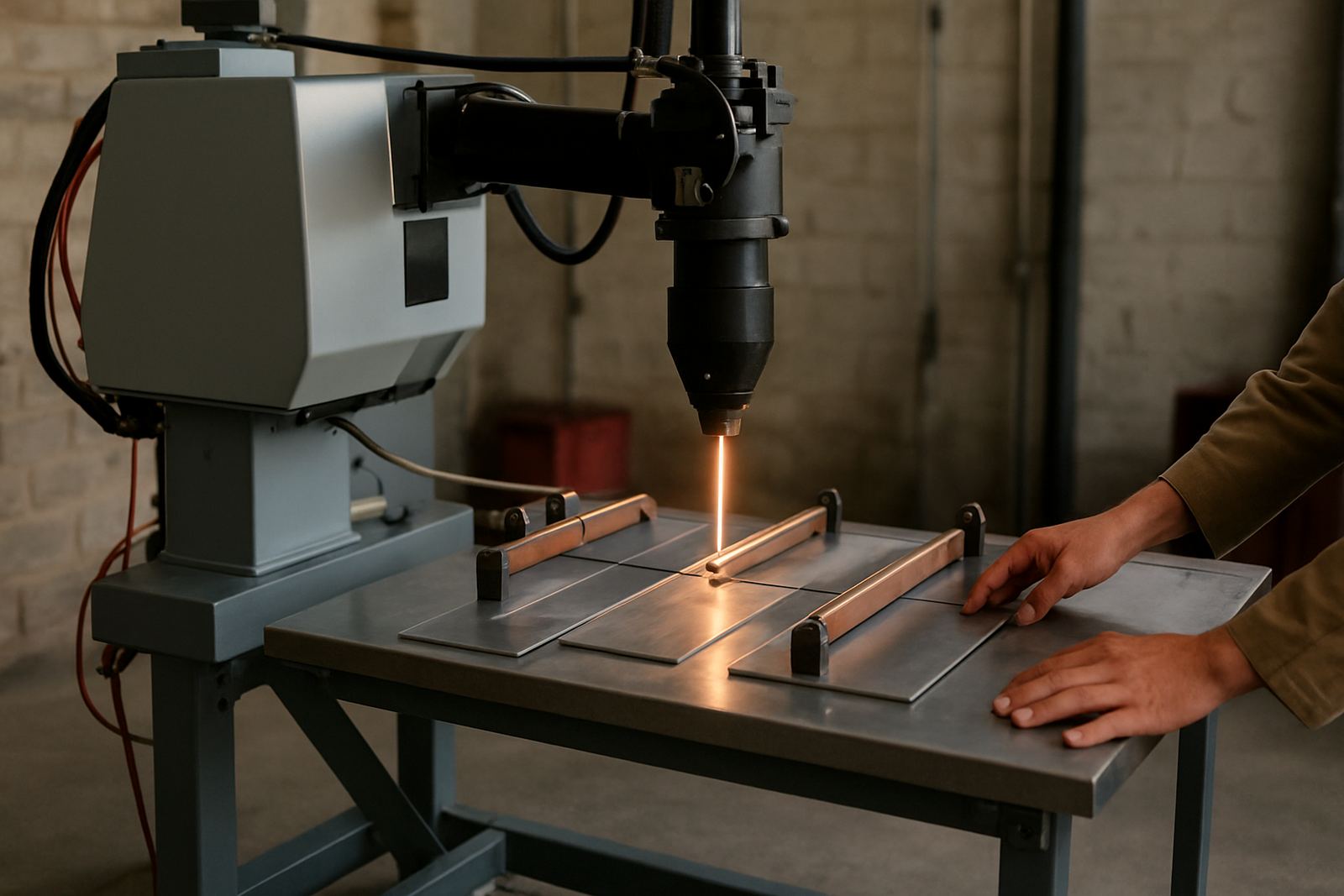
What the Thin Sheet Cell is designed to do
The Thin Sheet Cell is a controlled work area at our Centurion workshop for laser welding thin-gauge metal with careful heat input and repeatable positioning. It is suited to parts that need a neat weld line, limited clean-up, and far less chance of pulling, buckling or heat marking. That makes it a practical choice for repair work and small production runs where the part still has to fit back into an assembly after welding.
Typical work includes covers, brackets, shrouds, sensor housings, light frames, small stamped parts, appliance components, and fine repair sections on stainless, mild steel and aluminium. We also use it for parts that have already been machined or formed, where a conventional arc process would be too harsh. Because the setup is focused on thin material, the job can often be handled without stripping the whole assembly apart, which saves time and keeps associated parts safer from damage.
In many cases the main benefit is control. The operator can work on a small zone at a time, close the gap with filler where needed, and keep the surrounding material cooler. That is important in Pretoria heat as well as in coastal humidity when stored parts have surface contamination or light oxidation. A quick clean before welding often makes the difference between a tidy repair and a part that needs rework.
Suitable sheet sizes, material options and job limits
This service is best for thin sheet and light sections, generally from around 0.3 mm up to 2.5 mm, depending on the alloy, joint type and part geometry. Thinner material needs careful handling and proper support jigs, while slightly heavier light-gauge sections can usually be welded with more margin for fit-up. We assess each part before starting because a 1 mm stainless cover and a 1 mm aluminium tray do not behave the same way during welding.
Common material options include stainless steel, mild steel, spring steel in suitable repair cases, and aluminium. We also handle mixed repair work where only one damaged area needs build-up or crack repair. If the item is badly corroded, very oily, heavily painted, or heat sensitive from previous processes, we may recommend cleaning, pre-work straightening, or an alternative repair plan. The aim is to keep the part usable, not force a weld onto material that will fail later.
- Thin sheet repair from fine gauge up to light structural sections
- Localised crack closure, pinhole repair and edge build-up
- Single parts, short runs, and batch jobshop work
- Precision work for assemblies that must still line up after welding
For larger panels we can work section by section, but it is still important to know the final size, access points and whether there are hidden parts inside the assembly. That helps us plan support, clamping and sequence so the weld does not draw the part out of shape. A good fitting part is much easier to finish and less likely to need extra straightening afterwards.
Where this cell fits best in real work
The Thin Sheet Cell suits workshops and clients who need small, exact repairs rather than heavy fabrication. It is a strong fit for tooling rooms, maintenance teams, prototype builders, product developers, sheet metal shops and manufacturers with delicate parts that cannot be moved to a general welding bay without risk. We also use it for restoration pieces where the original part has thin edges or formed details that need saving.
In practice, the cell is often called for when a part has cracked at a fold, worn at an edge, or split near a pressed detail. It is also useful for closing fine holes, repairing corner damage, rebuilding tabs and correcting small mis-machined areas. On production parts it can support sample making, first-off repairs and small batch work before a full manufacturing run is approved.
For clients in Centurion, Pretoria East, Midrand, Rosslyn and Jet Park, parts can be brought to our workshop or sent by courier from anywhere in South Africa. That is useful for plants that cannot afford to keep a technician on site for a job that only needs one or two hours of controlled welding. It also helps when load-shedding or production downtime makes off-site repair the easier option.
- Maintenance teams with emergency repairs
- Manufacturers needing tidy prototype joining
- Tooling and die rooms with fine repair sections
- Short run production where consistency matters
Power, gas and setup requirements
The Thin Sheet Cell runs from a standard workshop power supply suitable for precision equipment, with stable supply preferred for consistent output. If your site has frequent power interruptions, we recommend sending the part to our Centurion base rather than attempting an on-site repair with unstable power. Thin material is unforgiving, and a voltage dip at the wrong time can affect weld consistency or create unnecessary rework.
Gas use depends on the material and the finish required. For many stainless and mild steel jobs, shielding gas helps keep the weld clean and reduces oxidation. Aluminium work may require extra attention to surface prep and gas coverage. We will advise on the most practical setup once we know the material, thickness and whether the part is cosmetic, structural or purely functional. Airflow in the room should also be controlled, because draughts can disturb shielding and dust can settle on clean joints.
Clamping and support are just as important as power. Thin sheet needs flat backing, correct spacing and a stable fixture so the heat does not pull the edges away from each other. In some cases we add temporary tabs or use support blocks to keep the part in line while it is welded. If the item has a painted or plated finish, note that the surrounding area may need masking or post-weld cleaning depending on how visible the repair will be.
How to prepare a part before sending it in
Good preparation saves time and helps us quote correctly. Please send clear photos, a short note on what failed, and the exact material if you know it. If the part has a drawing, sample, or matching component, that helps even more. Measure the damaged area and the overall size because thin sheet often looks simple until the original bends, flanges and tabs are checked properly.
Before delivery, remove loose dirt, oil, heavy rust flakes and any unneeded fittings that could get in the way. If the part has been working in a humid or dusty plant, wipe off contamination so we can inspect the crack line and joint edges. Where possible, pack the item so corners do not get bent in transit. For courier jobs nationwide, a rigid box and internal wrapping are better than a loose carton, especially for thin aluminium and stainless parts.
- Confirm material type and approximate thickness
- Mark the damaged area clearly with a photo or note
- State if the part must remain cosmetic on one side
- Include any mating part or drawing if fit-up matters
For batch work, please tell us how many pieces are involved, what the acceptable variation is, and whether there is a deadline tied to a shutdown or dispatch date. That lets us plan workshop time and keeps the job moving without delays.
Care, servicing and what to ask for when ordering
After welding, thin sheet parts should be handled with a bit of care until they are back in service. Avoid bending the repaired zone too soon, and do not force-fit the part if the mating section is still out by a fraction. If the item will see vibration, heat cycling or regular cleaning, let us know so we can advise on the best weld sequence and any follow-up checking you should do in your own plant.
For ongoing servicing, we recommend keeping repaired parts clean and dry, especially in coastal conditions where corrosion can start faster on thin edges and cut lines. If a part is exposed to oils, chemicals or frequent wash-down, ask about the most suitable post-weld finish. Periodic inspection is worthwhile on small brackets, hinge points and enclosure panels because cracks often begin at the same stressed area again if the cause was not corrected.
When ordering, please check the following: the material, thickness, length of the damaged section, whether access is one sided or both sides, the required finish, and whether the part must remain flat within a specific tolerance. If you need the part matched to a sample, send both pieces where possible. That helps us judge colour, size, fit and any distortion allowance before work starts. It also reduces back-and-forth and keeps the turnaround straight foward.
Laser Welders Jobshop in Centurion handles thin sheet cell work for clients across South Africa, with workshop collections in Midrand and service support into Pretoria East, Rosslyn and Jet Park. For enquiries, contact Marius van der Merwe and the team on our contact form.
Key facts
| Service | Controlled laser welding for thin-gauge sheet and light sections |
|---|---|
| Typical thickness | 0.3 mm to 2.5 mm, job dependent |
| Materials | Stainless steel, mild steel, aluminium and suitable light alloys |
| Use cases | Crack repair, edge build-up, joining, part restoration and prototype work |
| Workshop base | Centurion, Pretoria |
| Coverage | Nationwide courier jobs, with local collections and support areas |