Germiston gear damage that could not be ignored
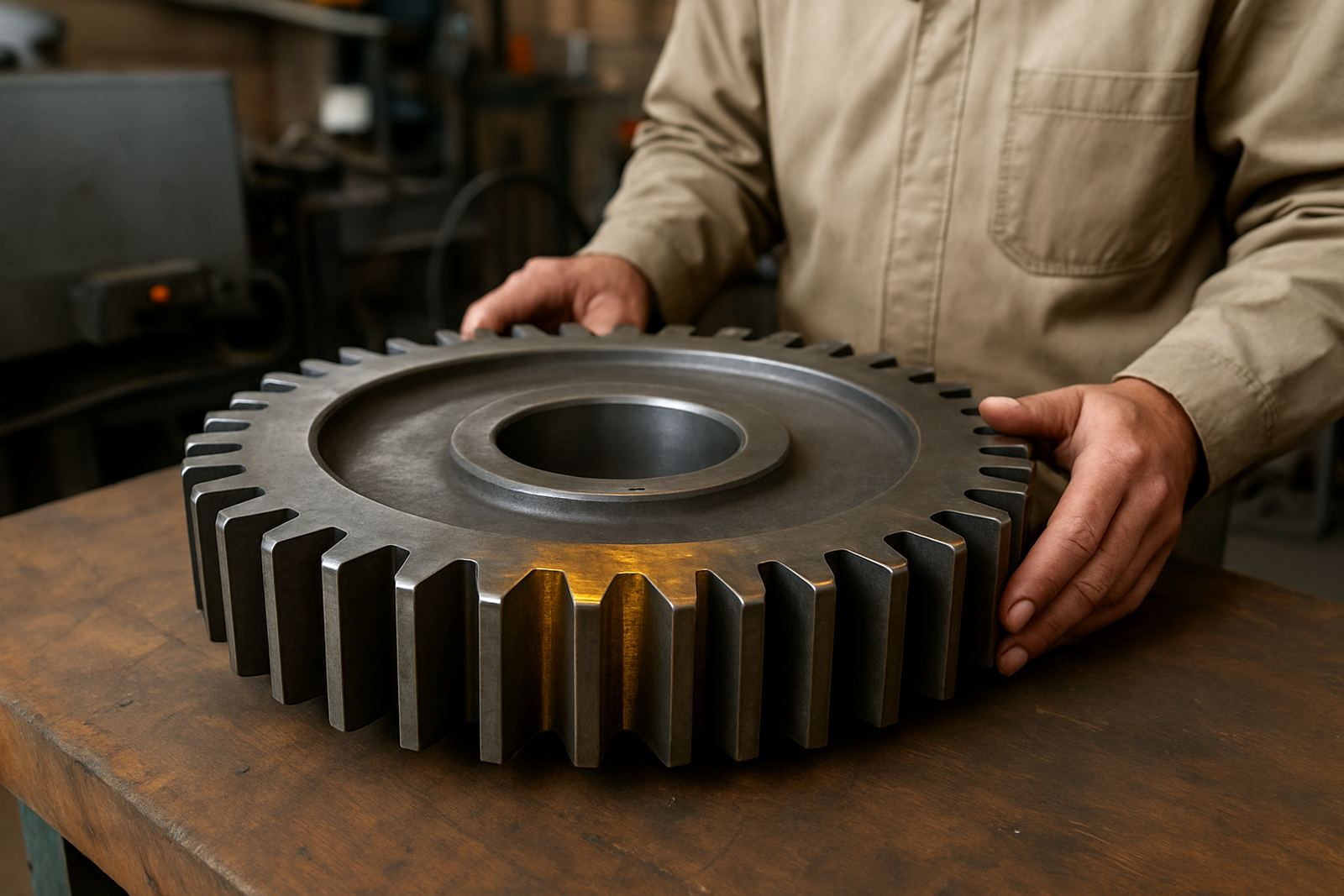
The client was a Germiston-based industrial repair team handling a critical gearset used in plant equipment that had already seen years of service. The teeth on one gear were chipped, worn and starting to break down at the edges, which meant the part was no longer fit for continued running without risking noise, vibration and further damage to the mating gear.
The brief was simple on paper but demanding in practice: rebuild the damaged teeth, hold the original pitch and profile as closely as possible, and keep heat input low so the gear did not distort. The part had to remain usable in a machine where downtime had a direct cost, so the repair needed to be accurate, durable and turned around quickly.
Because this was a job-shop repair, we also had to work around the realities of a mixed-condition component. The gear was not new, the tooth form was already partly compromised, and there were signs of previous wear at the root and flank areas. That meant extra prep, careful measurement and a steady hand through every pass.
What the workshop needed to control
Gear repairs are not just about putting material back. The main challenge is controlling heat, keeping the tooth shape consistent and leaving enough material for final dressing without overbuilding the profile. On parts like this, a heavy weld process can warp the gear or harden areas that then crack under load. For that reason we used a fine, localised laser welding approach suited to precision repair work.
The gear came in as a single component, so we first checked the tooth spacing, face width, visible wear pattern and any damage at the root. We also looked for cracking around the tooth body and hub, because hidden damage can change the repair plan. The environment in Germiston and the East Rand often means machinery works in dusty, high-use conditions, so the part was cleaned thoroughly before any repair was started.
- Original tooth form assessed against the mating gear condition
- Damage limited to select teeth, with no full replacement required
- Low heat input needed to reduce the risk of distortion
- Finish had to allow accurate dressing and reinstallation
How we rebuilt the damaged teeth
Once the gear was cleaned and marked out, we built up the damaged tooth sections in controlled layers. The laser process allowed us to add material precisely where it was needed, rather than flooding the entire area. That made it easier to restore the tooth tips and flanks without affecting the rest of the gear body. In practical terms, it meant less rework and better control over final dimensions.
We rebuilt the broken and thinned areas tooth by tooth, using the surrounding undamaged profiles as a guide. Where wear had rounded the edges, we reinstated the missing material so the gear could be dressed back to shape. The repaired section was then checked against the original geometry and compared with the undamaged teeth to keep the profile consistent.
The job also included careful cooling between passes. That matters on larger industrial parts because uneven heat can draw the metal and throw the runout off. The gear needed to stay true for installation, so we watched the build closely and made small corrections instead of forcing the repair through in one heavy pass.
Timeline, handover and fitment readiness
The repair ran over two weeks from receipt to handover. Week one covered assessment, cleaning, welding preparation and the rebuild on the damaged teeth. Week two covered final dressing, dimensional checks and release for collection. For a repair of this type, that turnaround kept the client from having to source a replacement gear immediately, which is often far slower and more expensive.
We handled the job from our Centurion base, with support for Gauteng collections and courier movement where required. That suited the client’s schedule and reduced the time the gear sat idle. The part was handed back ready for fitting, with the repaired tooth area dressed smooth enough for normal assembly work and inspection on site.
- Turnaround: 2 weeks total
- Collection and return arranged through Gauteng support channels
- Part released only after profile and finish checks
- Suitable for reinstallation without further major build work
Results on a worn industrial gearset
The finished repair restored the damaged teeth so the gear could go back into service instead of being scrapped. The client needed a part that would mesh cleanly, carry load and avoid chewing into the mating gear, and that was the standard we worked to. The repaired tooth sections were brought back into line with the existing profile, and the part was returned in a condition that suited continued industrial use.
For the client, the main result was avoided downtime. A replacement gear of this type can mean lead times, re-engineering, and a lot of unnecessary cost, especially if the rest of the set is still serviceable. By rebuilding only the failed areas, the repair kept the original component in use and bought the plant more working life from the same asset.
It also gave the maintenance team a practical option for future repairs. Once the pattern of wear is understood, we can often repeat the same approach on similar gears, provided the base metal still has enough integrity to work with. That is often the best answer when a gear is expensive, uncommon, or tied to a specific machine setup.
What we would do again on a similar job
If we had the same project again, we would follow the same repair sequence, starting with a full inspection and cleaning before any heat is applied. On gear work, that first hour saves a lot of trouble later. We would also keep the repair local to the damaged section, then do final dressing and profile checks against the undamaged teeth to keep the mesh dependable.
This is the kind of job we handle regularly from our Centurion workshop, with work moving out to Pretoria East, Midrand, Rosslyn, Jet Park and other industrial areas when needed. We also work with clients nationwide on couriered parts, which is useful when a machine cannot wait for a full replacement. If a gear is still repairable, it is worth checking before committing to a new part.
For specialist repairs like this, the real value is in controlled welding, honest assessment and a practical finish. Not every gear can be saved, but when the base material is still sound, laser rebuilding is often the quickest way to get a plant moving again.
Key facts
| Project | Germiston gear repair |
|---|---|
| Client type | Industrial repair team, Gauteng |
| Work carried out | Damaged gear teeth rebuilt by laser welding |
| Key constraint | Low heat input to reduce distortion and keep tooth profile |
| Timeline | 2 weeks from receipt to handover |
| Result | Repaired gear returned ready for fitment and continued service |