The Midrand Brief: Restore The Cavity Without Opening Up The Tool
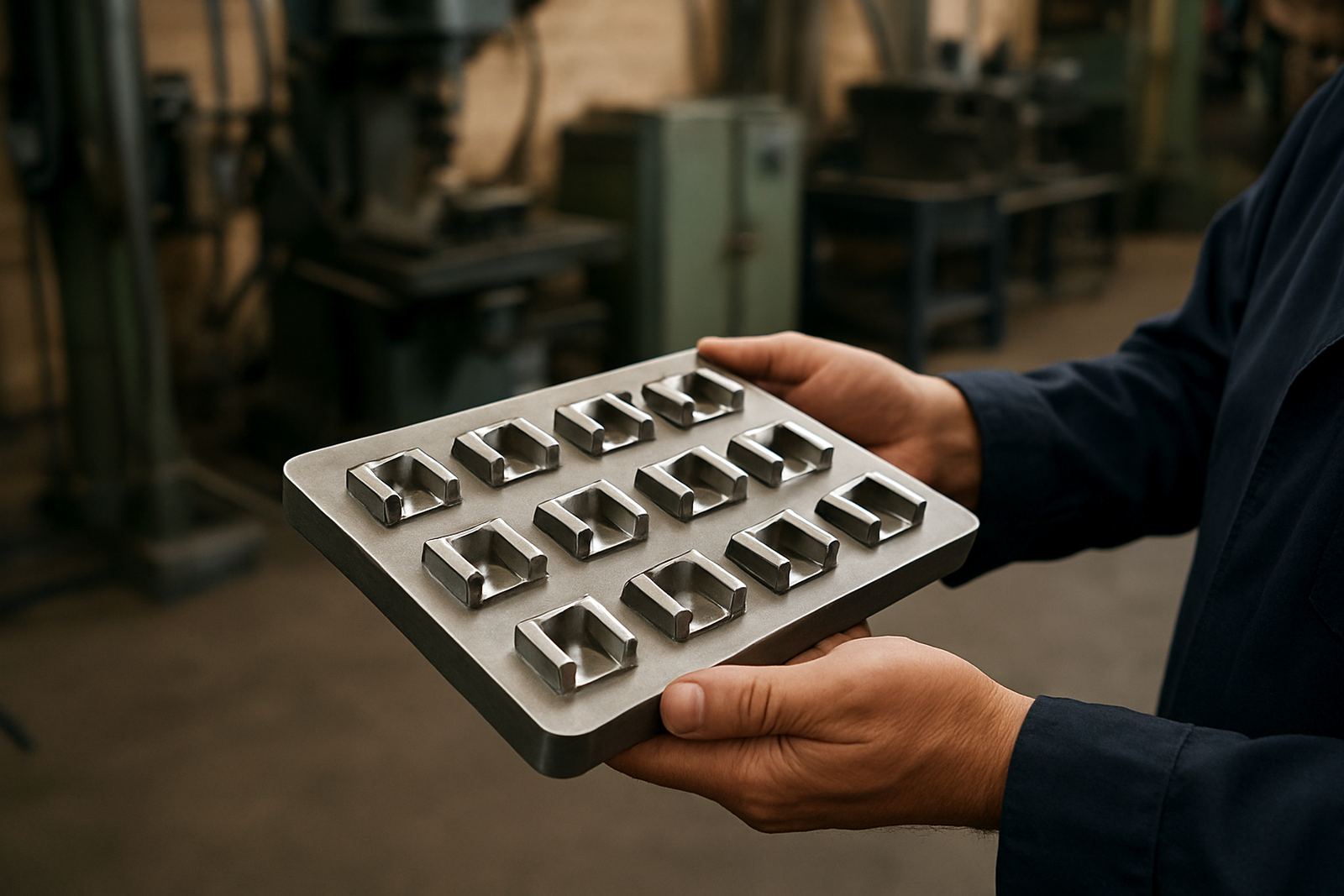
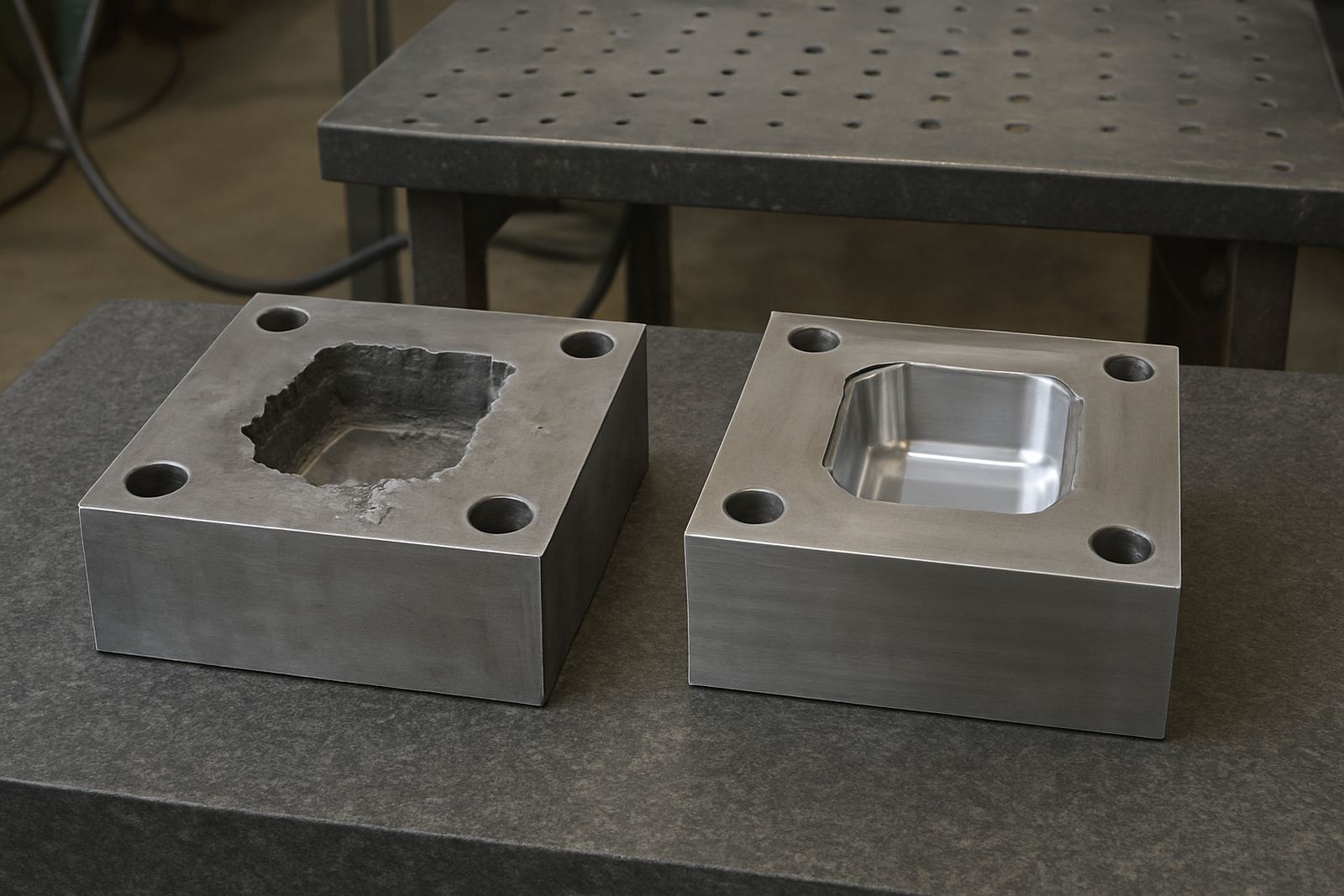
The customer brought us a production mould used on a high-volume run in Midrand. The cavity edge had worn away in one area and there was also light pitting on a formed section, which was affecting finish and part consistency. The brief was simple to state but tight in practice: restore the worn surface and keep downstream machining to a minimum.
In this type of job the biggest risk is putting in too much material and then creating extra fitting work later. The mould was still serviceable, so the client wanted a repair that would bring it back into tolerance without changing the working geometry more than necessary. We agreed on a repair path that focused on controlled build-up and close inspection between passes.
- Client type: mould maintenance and tooling user
- Area: Midrand, Gauteng
- Job type: cavity restoration on a production mould
- Main concern: minimal downstream machining
How The Part Came In And What We Had To Watch
The mould arrived through our Midrand collection point and was then brought to our Centurion workshop for assessment. The damaged area was localised, but the form was sensitive enough that even a small overshoot would have meant extra spark erosion or hand finishing. The surrounding steel had some heat-related staining from previous repairs, so we first cleaned and checked the area properly before any welding started.
Because the part would go back into production, we paid attention to surface condition, edge definition and how the repaired area would behave under polishing. The cavity wall was thin in places, so heat input had to be kept steady. This is the sort of job where patience matters more than speed, and a rushed pass can create more work than it saves.
- Substrate: tool steel mould section
- Damage: wear, edge loss and light pitting
- Constraint: keep finishing work low
- Workshop handling: controlled clamping and staged inspection
Laser Welding Method Used On The Build-Up
We used precision laser welding to add material in small controlled areas, building the cavity back in layers rather than laying down a heavy deposit. That let us work very close to the worn profile and keep the repair local. The technique is well suited to mould work because it produces a narrow heat affected zone and helps limit distortion.
For this job we matched the repair sequence to the cavity shape, starting at the deepest wear point and moving outwards. After each section we checked the profile against the original form and adjusted the next pass accordingly. It is the kind of work where a few tenths of a millimetre matter, especially on a mould that must keep producing repeatable parts.
- Method: precision laser welding with layered build-up
- Heat control: narrow affected zone for less distortion
- Repair focus: localised cavity restoration, not a full rework
- Follow-up: profile checks between passes
Finish, Fitting And Quality Checks
Once the weld build-up was complete, Anele and the team checked the repaired section for surface continuity and visible defects. The aim was to leave enough material for light final fitting only, not a full recut. The client specifically asked for minimal downstream machining, so we kept the weld crown consistent and avoided overbuilding the surface.
We then verified the repaired area against the mould face and checked that the transition into the surrounding steel would polish cleanly. On mould work, especially where a cavity has been worn by repeated cycles, small inconsistencies can show up quickly in the finished part. That is why the final inspection is just as important as the welding itself.
- Inspection points: build height, surface integrity, edge definition
- Objective: reduce fitting time on return to the client
- Resulting condition: suitable for light machining and polish
- Quality control lead: Anele Dlamini
Timeline, Coordination And Delivery Back To Midrand
The full job took two weeks from collection to completion. That included assessment, repair, inspection and handover preparation. For clients working with production tooling, turnaround is often tied to machine uptime and mould availability, so we keep communication direct and practical.
Priya handled client updates while Thabo coordinated workshop flow so the mould could move through the repair without sitting idle. The part was collected through our Midrand channel and returned ready for the client's fitting team to do the final touch-up. No special transport complications came up, but we still packed the part carefully because tooling edges can nick easily on the way back.
- Turnaround: 2 weeks
- Logistics: Midrand collection and return to client
- Support: client updates during repair stages
- Handover: ready for final fitting and production prep
What The Client Got Back And What We Would Repeat
The restored cavity came back with its working surface rebuilt and the damaged edge recovered, while keeping extra machining to a minimum. The customer was able to put the mould back into service without the long delay that a full insert replacement would have caused. That matters in Midrand, where many production schedules are tight and downtime can ripple through a whole line.
What we would do again is exactly what we did here: start with a careful assessment, build up only where needed, and keep checking the profile as the repair develops. For mould maintenance jobs, that approach gives the best chance of saving original geometry and keeping the final fitting simple. It is also the safest way to handle parts where the steel is still usable but just needs skilled restoration, not replacement.
- Outcome: cavity restored for production use
- Main gain: less downstream machining
- Best practice repeated: small controlled passes and frequent checks
- Suitable for: maintenance repairs, not just emergency breakdowns
Key facts
| Project | Midrand mould cavity restoration |
|---|---|
| Client location | Midrand, Gauteng |
| Work carried out | Precision laser welding and cavity build-up |
| Material type | Tool steel mould section |
| Timeline | 2 weeks |
| Collection point | Midrand Collections |
| Workshop base | Centurion, Pretoria |
| Service line | Mould And Die |