Why tiny components need firmer control than bigger jobs
When people see a small part, they often assume it is easier to weld. In practice the opposite is true. A miniature bracket, thin shim, instrument part or worn edge has very little mass to carry heat, so it moves quickly when the weld starts. If the component can lift, twist or settle into a gap, the laser will follow that movement and the repair will wander.
Good fixturing keeps the part in the same position from start to finish. It also helps the operator place the weld exactly where it is needed, instead of fighting the job to keep it still. For parts under 3 mm thick, or pieces with fine features like slots, pins and corners, the fixture becomes part of the process, not just a holding point.
In our Centurion workshop, we see this often on precision repairs for tooling, mould inserts and small stainless assemblies. If the clamping is weak, the heat affected zone widens and the repair can lose shape. If the clamp supports the part properly, the weld can be narrow, controlled and far easier to machine or finish afterwards.
How secure fixturing supports laser accuracy
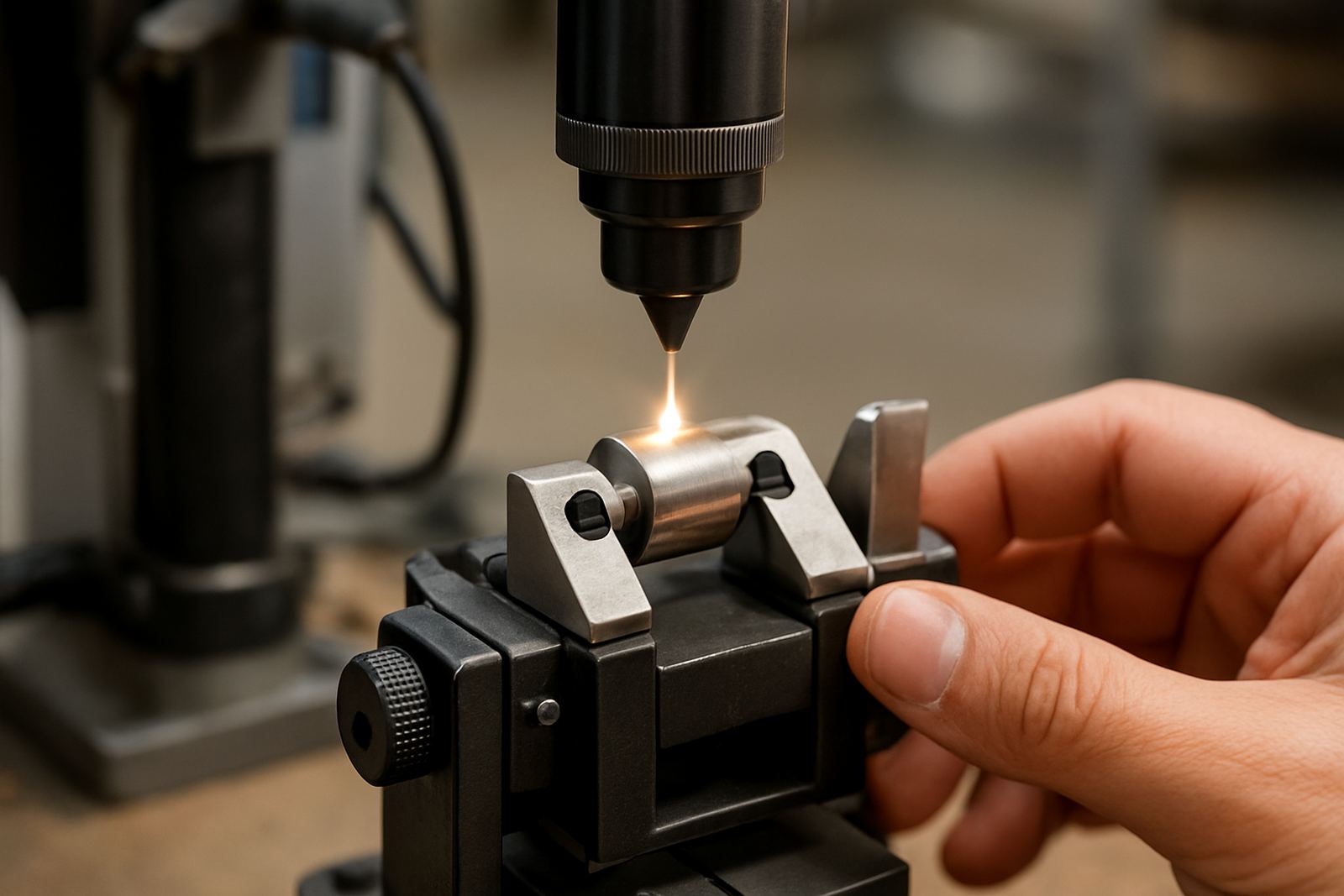
Laser welding puts energy into a very small area, which is ideal for delicate work, but only if the joint line stays true. A secure fixture does three things at once: it holds alignment, limits vibration and manages heat flow. That gives the technician a stable base to work from and reduces the risk of rework.
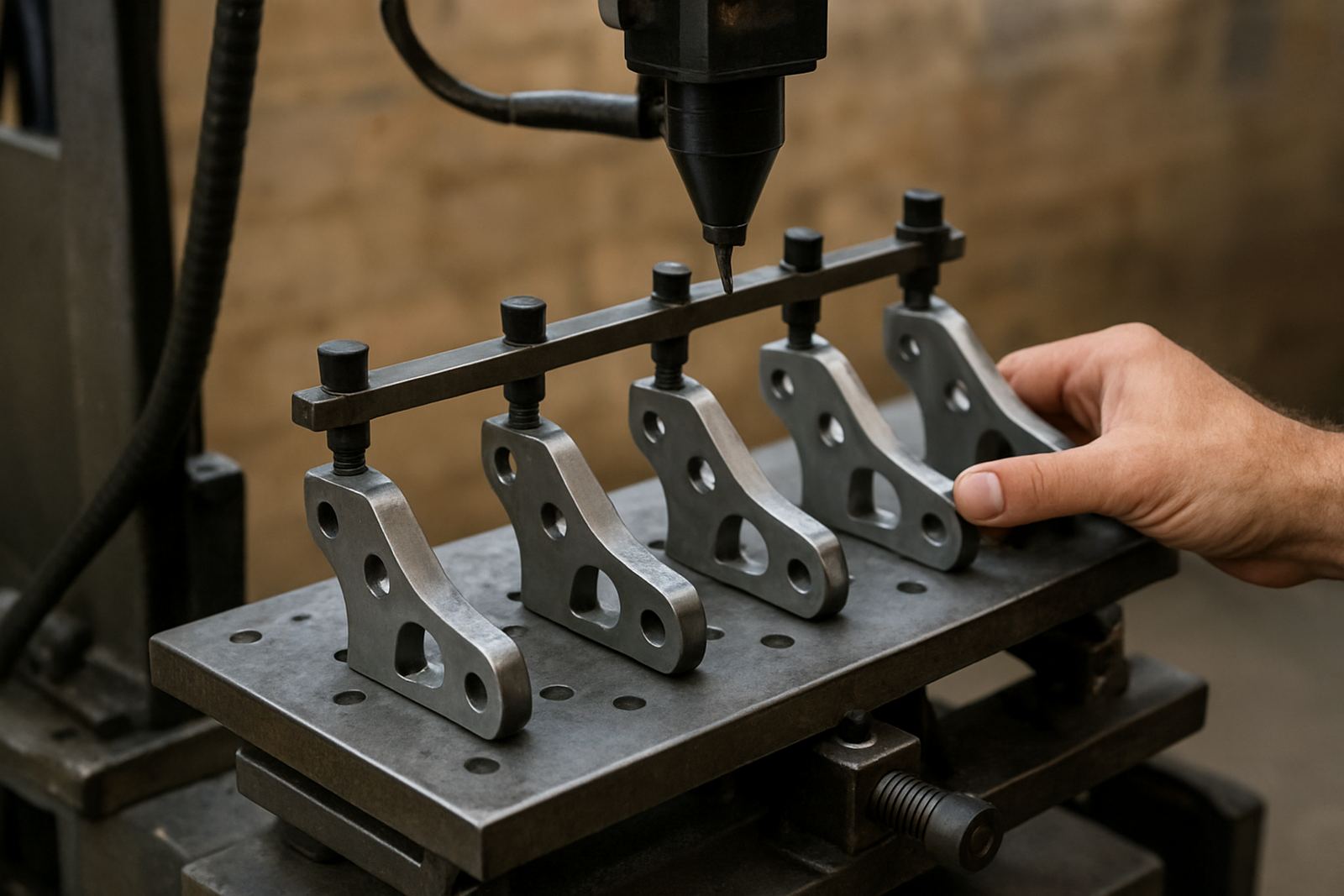
The best fixtures for small parts are usually simple and purpose-built. They may use fine-adjust clamps, soft jaws, locating pins, step blocks, or precision stops cut for one specific job. On repeat work, a custom jig can save time and improve consistency across a batch. For one-off repairs, a practical setup often beats a complicated frame that takes longer to prepare than the weld itself.
- Keep the contact points close to the weld zone without blocking access
- Use supports that match the material so the part does not mark or slip
- Leave room for view lines, beam access and post-weld inspection
- Make sure the part cannot spring open when heat is applied
Clamping methods that work on delicate parts
Not every component can handle the same pressure. Thin stainless, soft aluminium, heat-sensitive assemblies and small repaired edges each need their own approach. Too much force can deform the job before welding even starts, while too little force leaves the part free to creep when the weld pool forms.
For delicate parts, the aim is steady pressure rather than brute force. In some cases, a soft backing plate or a copper support is used to help draw heat away and keep the underside stable. On other jobs, magnetic holding is not suitable because the part is too light or the surface too uneven. Mechanical clamping with fine adjustment is often more reliable, especially where the joint needs exact alignment over a short seam.
Good operators also think about access for cleaning and inspection. A fixture that holds the part too tightly can trap swarf, oil or oxidised material in the joint. That can cause porosity or weak bonding. So the setup needs enough grip to keep the workpiece still, but not so much that it hides the problem areas from view.
Common mistakes that turn small jobs into costly repairs
Small parts punish shortcuts. A job may look simple at the bench, then move once heat is applied and end up needing extra build-up or a full remake. The most common issues are usually not about the welding itself, but about how the part was prepared and held.
- Clamping on a bend or edge that should stay free to move
- Using a fixture that scratches polished or visible surfaces
- Setting the part on a dirty plate so the base does not sit flat
- Holding too far from the weld zone, which allows the joint to flex
- Ignoring thermal expansion, especially on long thin strips
We often see this with repair pieces sent in from Gauteng workshops after a first attempt has failed. The part may be fine in the cold state, then pulls out of line once the beam starts to work. That is why the setup must be checked before the first pulse, not after the first mistake.
A local example from a Centurion workshop bench
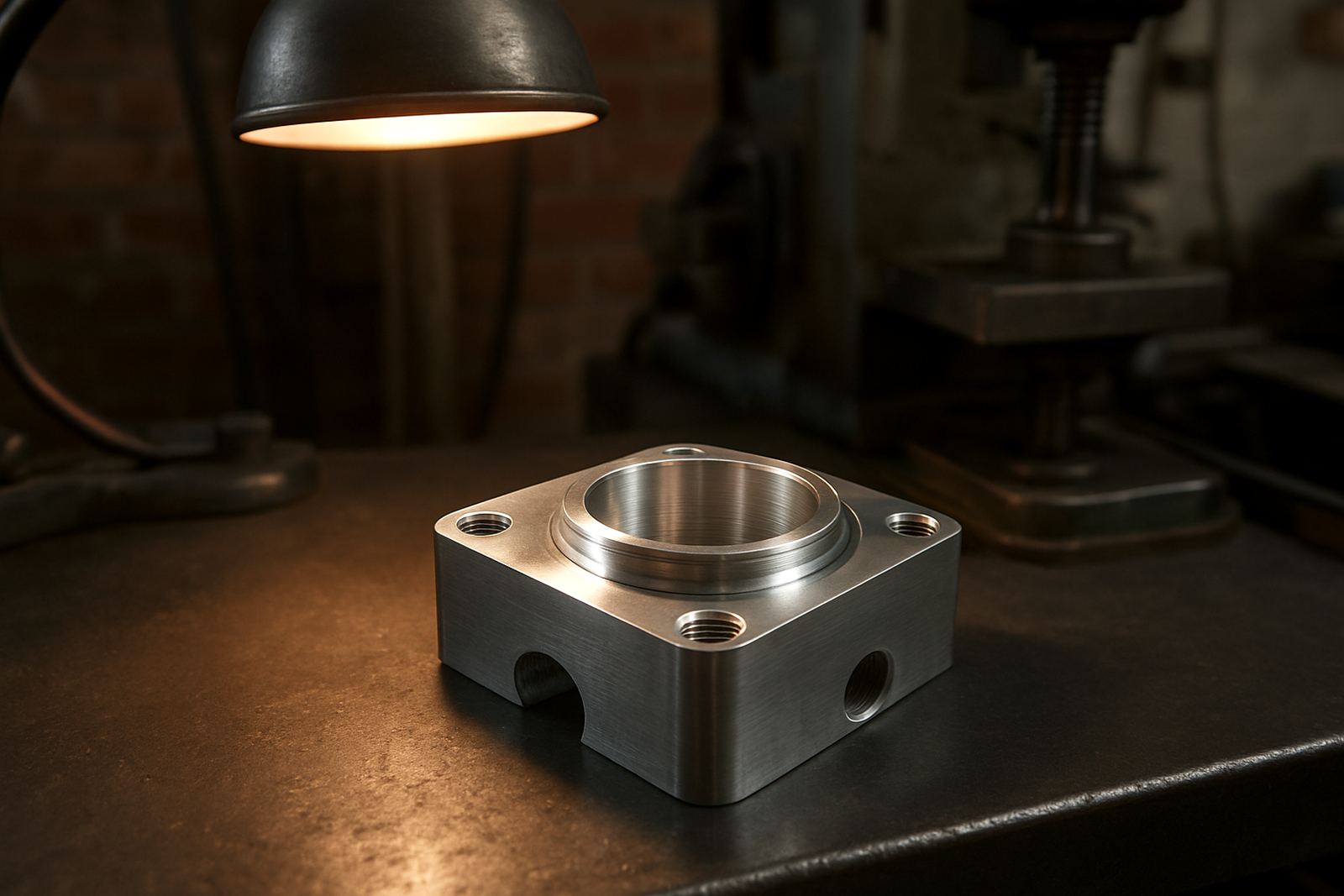
A good example is a small stainless wear piece that came through from a Pretoria East customer after repeated cracking on one corner. The component was only a few centimetres across, but it had to sit square in a machine housing with very tight clearance. The first problem was not the crack itself, it was the fact that the part had no proper support under the repair area.
We set it into a fixture with a shaped backer, light side restraint and clear access to the damaged edge. That allowed the weld to be laid in narrow passes without the part lifting. Because the workpiece was held flat, the repair only needed minor dressing before refit. A job like that can go wrong quickly if the clamp pressure is uneven or if the component is allowed to heat on a weak support.
For clients in Centurion, Midrand and Rosslyn, this kind of setup matters because many small parts are linked to production schedules. One delayed repair can stop a line, hold back a machine build or leave a service team waiting on a replacement piece.
What good small-part clamping looks like in practice
Secure fixturing does not need to be complicated, but it should be thought through. The part must sit where the operator can see the joint clearly, and the fixture should support the job without masking the defect. On batch work, the repeatability of the setup matters just as much as the weld speed.
At Laser Welders Jobshop, we treat the clamp and the weld as one system. That means checking alignment, contact, cleanliness and access before the repair starts. It also means choosing a setup that suits the material, the size of the part and the finish required afterwards. In a Pretoria workshop, with power interruptions, humidity and mixed repair work coming through daily, a stable fixture keeps the process steady and helps avoid costly rework.
For miniature or delicate components, accuracy begins long before the beam fires. It starts with the way the part is held, and with the discipline to prepare the job properly the first time.