Start With a Clear Job Card and Part List
Before a part leaves your premises, write down exactly what must be done. A welding technician needs to know the material, the fault, the finished dimensions and whether the part must match an existing assembly. For small precision work, even a 1 mm error can affect fit-up, so do not rely on a quick phone note alone.
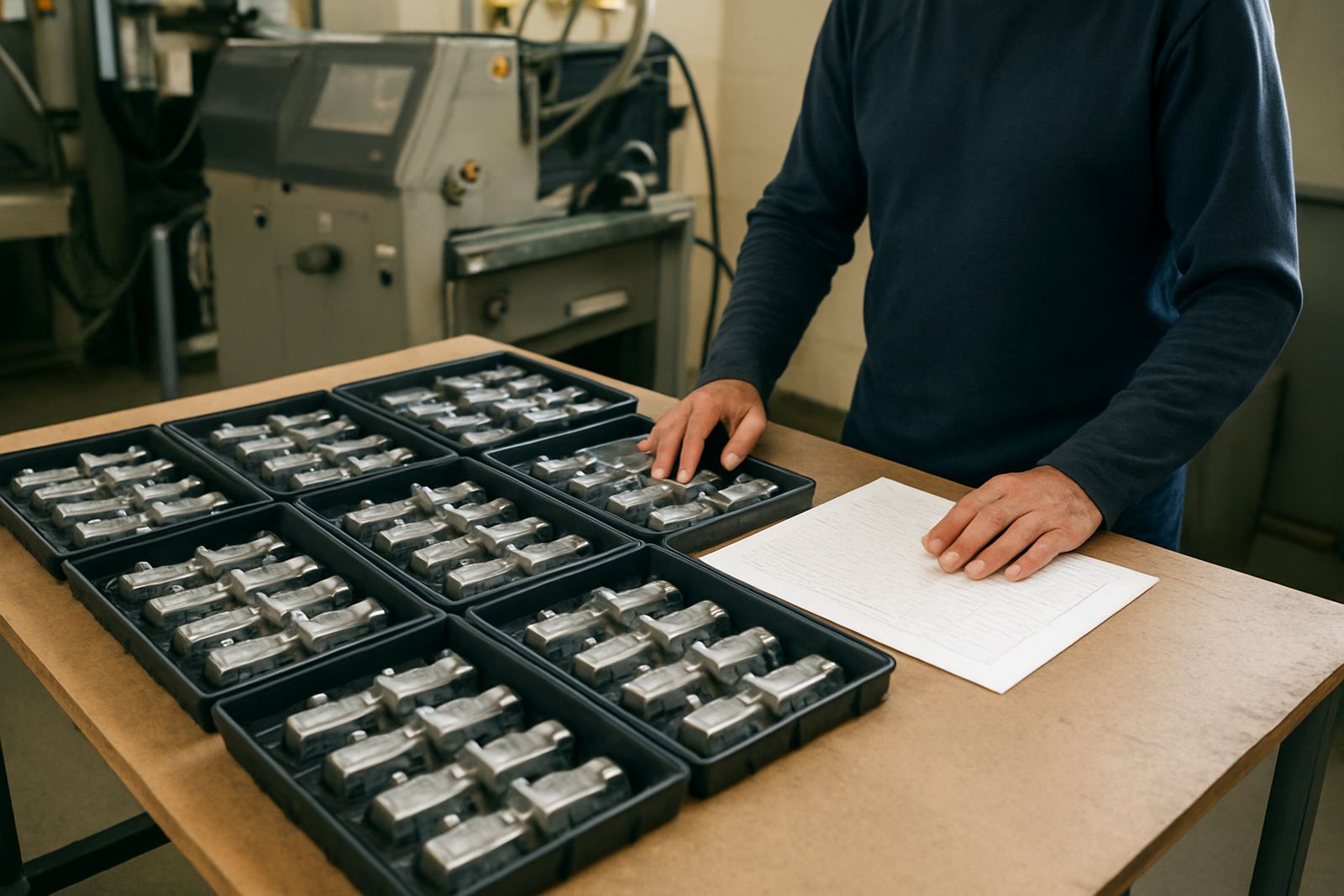
Include the contact person, return delivery address, collection point if different, and a mobile number that is answered during the day. If the part is linked to a machine serial number, mould number or production run, add that too. For batch work, separate the items with labels so one part does not get mixed with another.
- Part name or number
- Material type if known
- Fault description or repair required
- Critical dimensions to protect
- Preferred turnaround date
Clean the Part Before You Pack It
Dust, oil, coolant and loose swarf make inspection harder and can contaminate the repair area. A clean part is easier to assess and safer to handle. Wipe off cutting oil or polishing compound, then dry the item properly before wrapping. If there is rust or heavy grime, remove what you can without changing the damaged area, because the workshop still needs to see the crack, chip or worn section.
On stainless jobs, surface contamination is a common issue. On aluminium, soft edges can be damaged by rough handling, so use lint-free cloths where possible and avoid tossing parts into a box with scrap offcuts. If the item came from a coastal area like Durban or Port Elizabeth, mention any salt exposure because corrosion can be worse than it looks at first glance.
- Remove loose dirt and metal chips
- Drain coolant or oil where possible
- Dry the part fully before wrapping
- Mark any areas that must not be ground away
Wrap for Impact, Not Just for Dust
Courier handling in South Africa can be rough, especially when parcels are shifted between depots, sorted in trucks and moved by hand at collection points. A precision part needs more than a light layer of bubble wrap. The goal is to stop movement inside the box and keep edges from striking hard surfaces.
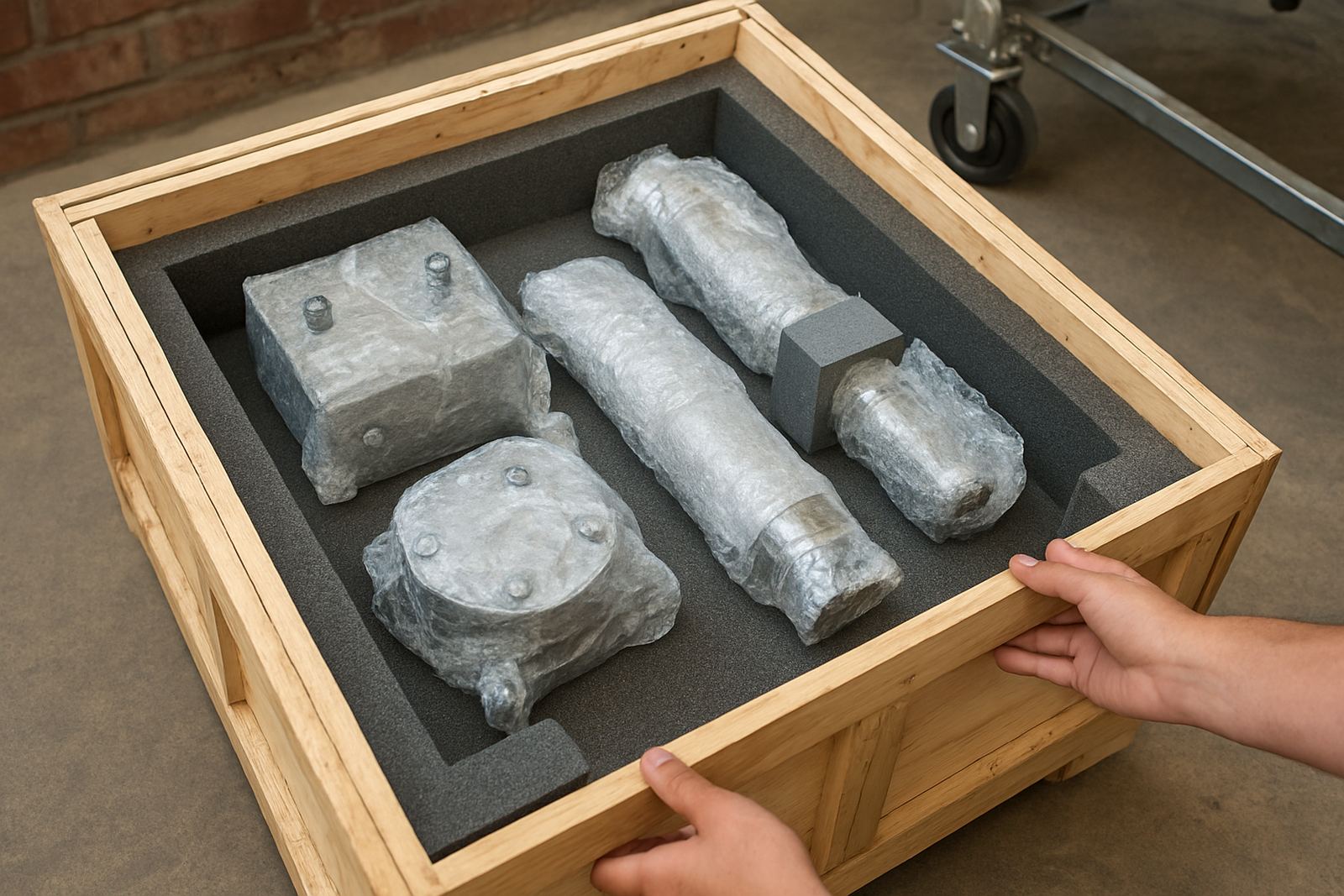
Use a first layer of soft wrap, then a second layer of padding around sharp points and machined faces. Place the wrapped item in a box that leaves little empty space. If there is room for movement, fill it with paper, foam or air cushions. Heavier parts should sit at the bottom of the carton and be restrained so they do not punch through the base.
For multiple small parts, pack each one separately. A small bag of parts rattling together can mark a repaired surface before the workshop even opens the parcel. If you are sending a mould insert, die section or thin sheet component, use a rigid inner tray or flat board so the item does not flex in transit.
- Use a double layer for sharp or machined edges
- Block movement inside the carton
- Keep like parts together but separated from each other
- Choose a box strong enough for the weight
Protect the Critical Faces and Dimensions
When a part has been measured to the hundredth, the packaging must protect the measuring surfaces. Cover threads, locating pins, sealing faces and polished edges with suitable protection before boxing. For a shaft, bush or small fitting, even slight contact with a hard object can change the fit.
Do not clamp tape directly onto a surface that will be welded or machined later. Instead, wrap around the body of the part and leave the work area visible. If there are alignment marks, scribe lines or reference points, photograph them before dispatch and include the pictures with the job notes. That helps if the item arrives with one mark rubbed off during transport.
In Centurion and Midrand, many clients send parts between production runs and need them back quickly. A good habit is to place a simple sketch or printed photo inside the box showing which face is up, which end is front and where the defect sits. It saves time and avoids confusion at intake.
Label the Parcel So the Workshop Can Receive It Fast
Clear labelling helps the courier, the receiver and the workshop team. Write the sender name, contact number, delivery address and the job reference on the outside of the parcel. If the package contains a precision repair, mark it as fragile and add orientation notes where needed, such as this side up or do not stack. That will not stop every hard knock but it does reduce handling mistakes.
Inside the parcel, place a second copy of the job card in a plastic sleeve. If the outer label gets damaged, the workshop still has the details it needs. For multiple parcels in one job, number them in sequence, for example 1 of 3, 2 of 3 and 3 of 3. That is especially useful for larger parts coming from Rosslyn, Jet Park or outlying industrial areas where collection and delivery may happen on different schedules.
- Sender name and phone number
- Delivery address and postcode
- Job reference or order number
- Count of parcels in the consignment
- Special handling notes
Use Local Courier Rules and Practical South African Timing
Courier timing matters when a production line is waiting on a repaired component. Try to avoid late-day drop-offs if the part is needed urgently, because a missed collection can add a full day. In Pretoria and Centurion, handovers early in the morning are often safer if the part must reach the workshop the same day. For nationwide work, check the route and allow for road delays, load-shedding related backlogs at depots, and weather that can slow down transit from coastal or inland centres.
If the part is small and high value, use a service that records collection and delivery properly. Keep the waybill number, take a photo of the packed parcel and note the condition before dispatch. If you are sending from a factory in a busy industrial area, tell the security counter or gatehouse who is collecting so the parcel is not delayed at the entrance. A few minutes of preparation can prevent a full day's downtime.
A Pretoria Example: One Small Part, One Big Delay Avoided
A client in Pretoria East once sent a thin stainless fitting that had developed a crack near a welded seam. The part was only the size of a hand, but it controlled a larger assembly. Instead of placing it loose in a box, the team cleaned it, wrapped it in soft material, fixed it to a cardboard backing and marked the crack location with a note and photo. The parcel arrived intact, the fault was confirmed quickly and the repair could start without extra measuring time.
That sort of preparation matters because precision welding is often about preserving what already works. The better the part arrives, the less time is spent on inspection and the sooner the workshop can focus on the actual repair. For small, delicate or unusual components, careful packing is not extra admin, it is part of the job.