

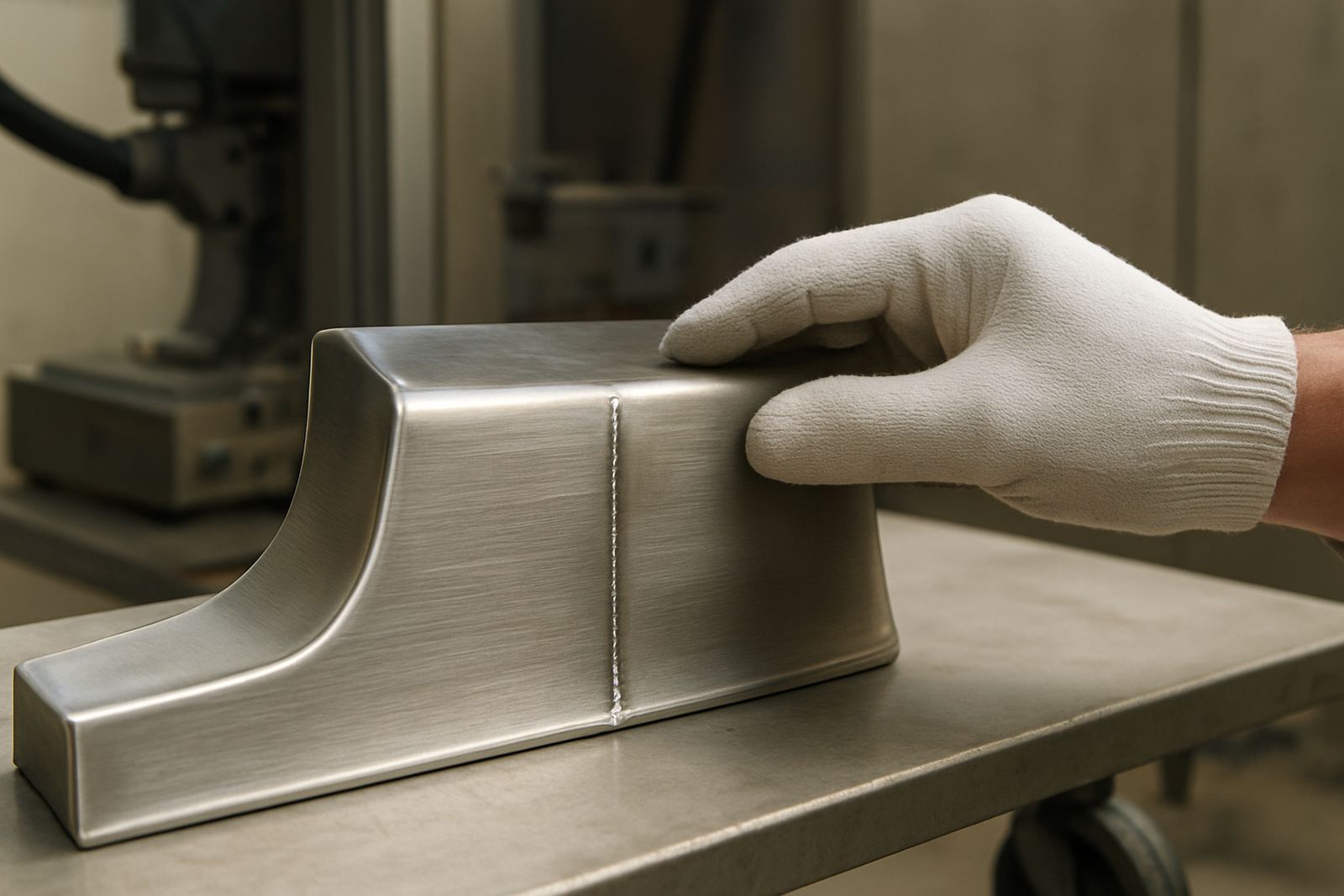
When Stainless Needs More Than Grinding
Stainless components usually come to us after cracking, chipping, wear at a sealing face, or damage around threads, corners and thin edges. In many cases the part is still worth saving, but it must be repaired without pulling in the metal, staining the surface or distorting the shape. That is where laser welding works well. It gives a narrow heat affected zone and allows local repair on sections that would be difficult to fix with heavier welding methods.
We handle stainless repairs for production spares, machine parts, fittings, tool components, guards, housings and small assemblies. Work is carried out at our Centurion workshop, with collections in Pretoria East and Midrand, and courier support for clients in Durban, Cape Town, Gqeberha and other parts of South Africa. For site-critical work, we look at the part, the metal grade and the service conditions before recommending the repair route.
What Is Included In A Stainless Repair
Our stainless repair service is focused on neat build-up, crack closure and accurate restoration of the damaged area. We aim to keep the surrounding finish as clean as possible and we work to the original profile where that is practical. For parts that must still fit seals, guides or mating surfaces, we pay close attention to edge condition, flatness and clean-up after welding.
- Crack repair on stainless plates, brackets and housings
- Edge build-up on worn lips, slots and corners
- Local repair on threads, seats and locating points
- Repair of thin-wall sections where heat control matters
- Restoration of small production parts and one-off components
- Clean-up for items that must keep a neat visible finish
We also assist with mixed repair jobs where only one section of a part needs attention. If a component has previously been overground, badly heated or contaminated, we will advise whether it can still be repaired properly, or if a staged approach is safer.
How We Repair Stainless Parts
Every job starts with inspection. We check the grade, the damage pattern, wall thickness and any signs of contamination, previous welding or fatigue. If needed, we ask for photos first so we can advise whether the part should be sent in for assessment. Once the job is accepted, we clean the repair area thoroughly. Stainless must be free of oil, paint, oxide and grinding residue before welding, otherwise the finish and corrosion resistance can suffer.
During welding, the beam is controlled in small sections to limit heat input. This helps prevent warping and reduces the chance of discoloration. Where required, we support the part with jigs or fixtures to hold alignment. After welding, we dress the repair only as much as the part needs, because overgrinding can remove useful material and affect fit. On functional parts, we check dimension against the original requirement and make final adjustments carefully.
- Assessment and damage marking
- Cleaning and preparation of the stainless surface
- Controlled laser welding in local sections
- Profile correction, finishing and inspection
- Collection, courier dispatch or workshop handover
Turnaround For Workshop And Courier Jobs
Turnaround depends on part size, material condition and the amount of build-up needed. Small stainless repairs can often move quickly through the workshop, while parts with multiple cracks, distortion or precision surfaces take longer. If a job comes in from a plant in Rosslyn, Jet Park or another industrial area, we can usually give a practical time estimate after inspection. For courier jobs from further afield, transit time is added to the repair schedule.
Where the job is urgent, tell us what the part does and what the downtime costs are. We can then prioritise the work where possible. In many cases the repair is limited to one area, so the turnaround is far quicker than replacement, especially if the part has to be manufactured specially or imported. For production support, we also assist with batch repair work so the same type of damage can be processed in a planned run.
Pricing Based On Damage, Not Guesswork
We price stainless repairs according to the real work involved. That means we consider the damage size, access, thickness, metal grade, preparation time and the finish required. A small crack on a clean bracket is a different job from a worn sealing face on a thin component with distortion. Because every part is assessed individually, you get a quote that reflects the actual repair path rather than a blanket rate.
For repeat work, batch jobs or ongoing plant support, we can discuss a practical pricing structure. This is often useful for maintenance teams, fabrication shops and manufacturers that see the same stainless wear patterns again and again. If you are comparing repair against replacement, we can also help you judge whether the part is worth saving based on lead time and likely service life.
There is no benefit in overdoing a repair. We try to keep the work precise and cost-effective, with the right amount of build-up and finishing for the application. That approach matters in tough conditions too, especially around coastal humidity, washdown areas and places where chemical exposure can shorten service life if the repair is left rough.
Service Intervals And Ongoing Care
Stainless does not mean maintenance-free. Parts that are exposed to vibration, heat cycles, moisture, cleaning chemicals or constant contact should be inspected regularly. As a guide, high-use industrial parts should be checked at planned shutdowns or every 3 to 6 months, while lighter service items can often be reviewed annually. Early attention on a small crack is usually cheaper than waiting until the part tears further or affects alignment.
After repair, we recommend basic care that suits the environment. Keep the part clean, remove trapped contamination and check for movement around the repaired section during normal maintenance rounds. If a repaired item is part of a process line, any change in vibration, leakage or fit should be looked at early. In coastal areas like Durban, stainless can still show staining if it is not washed down correctly, so regular cleaning matters just as much as the repair itself.
- Inspect repaired areas at scheduled maintenance stops
- Watch for fresh cracking, leakage or movement
- Keep the surface clean and free from corrosive residue
- Report fit changes early before damage spreads